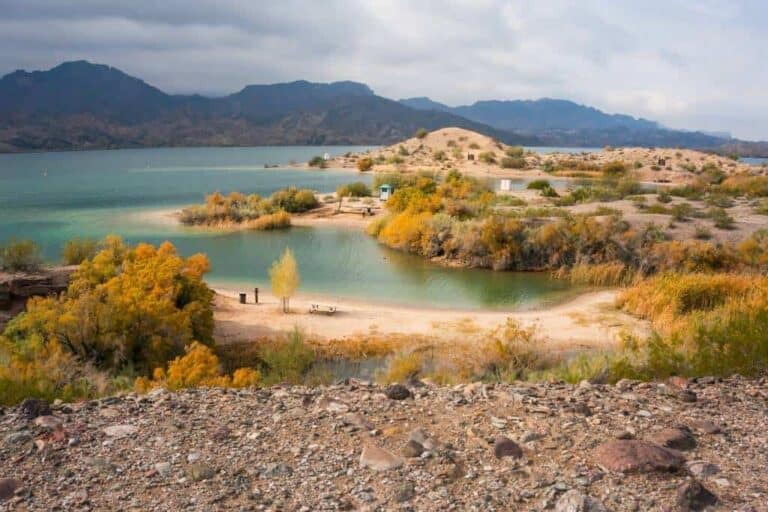
An Easy Guide to Blue Ridge Parkway Camping
Note: Advertising is how we keep this site free for you to enjoy, and we earn a commission from affiliate links that may be included in this post. Thank you for supporting Back Road Ramblers!
Last summer, I was fortunate enough to embark on a leisurely Blue Ridge Parkway road trip, just me and my favorite dog. We spent a week exploring beautiful vistas, exhilarating hiking trails, and bustling mountain villages.
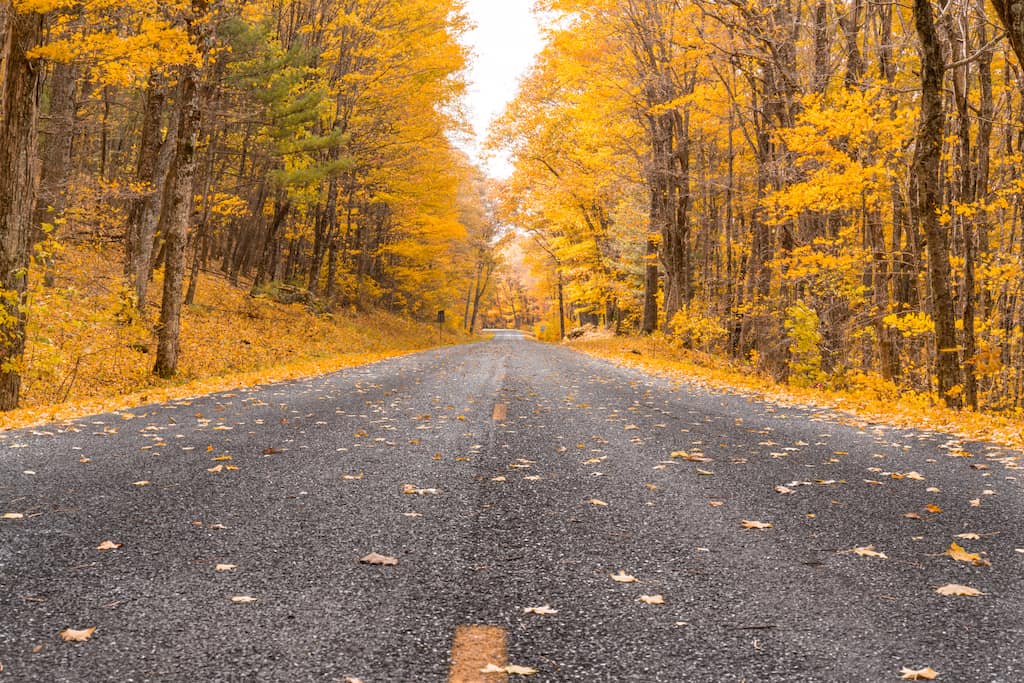
And camping!
I love pitching my tent when I travel, and camping on the Blue Ridge Parkway made this an affordable, outdoor-centric vacation.
There are nine campgrounds along the Blue Ridge Parkway, so you can avoid expensive hotels, spend your days exploring the mountains, and spend your nights roasting marshmallows and watching the stars. Are you in?
Whether you drive a small section of the Blue Ridge Parkway or all 469 miles from Shenandoah National Park to the Great Smoky Mountains, you’ll no doubt come away inspired, and you may become a dedicated road-tripper if you aren’t one already.
Ready for far-reaching vistas, mountain music, and small towns oozing with character and charm? The Blue Ridge Parkway has all that and more.
But before you hop in the car and head to the mountains to do all the fabulous things on the Blue Ridge Parkway, there are a few things you should know to make your trip a success.
Here are some things you need to know to make your Blue Ridge Parkway camping trip memorable for all the right reasons.
Hurricane Helene and its Effect on the Blue Ridge Parkway Campgrounds
My trip happened the summer before Hurricane Helene hit. When the storm reached the southern Appalachians on September 27, 2024, it dropped up to 30 inches of rain in some areas. That set off landslides, washed out sections of road, and brought down thousands of trees across the parkway.
A week later, the National Park Service closed the entire 469-mile road while crews assessed the damage. The North Carolina section took the hardest hit.
Recovery has taken two years and cost an estimated $1.7 billion. As of early October 2026, 458 of the parkway’s 469 miles are open again. Crews have finished 48 of the 60 landslide repairs. The last closed stretch runs from milepost 344.2 to 355.3, between Little Switzerland and Mount Mitchell, and all recreation is prohibited there. Officials expect the full parkway to reopen by the end of 2026.
What this means for campers this season:
Open: Otter Creek, Peaks of Otter, Rocky Knob, Doughton Park, Julian Price (Loops A, B and D), and Mount Pisgah (through October 25)
Closed for 2026: Linville Falls and Crabtree Falls campgrounds. You can still reach the Linville Falls trails from the U.S. Forest Service parking lot on Old NC 105.
If you’re driving the whole parkway this fall, plan a detour around the closed section near Mount Mitchell. Check the NPS road status page before you go, because conditions change quickly.
What is the best time to drive on the Blue Ridge Parkway?
Fall is gorgeous on the Blue Ridge Parkway, and you can expect the fall foliage season to last from early to late October, depending on elevation. This is (of course) the busy season, so if traffic is a more significant concern than fall colors, consider traveling the parkway in May, June, or September.
As for temperatures, nights in the mountains can occasionally drop below freezing in October, so plan accordingly. Summer is blissfully warm most of the time, but you will have to contend with mosquitoes and ticks.
Know your Blue Ridge Parkway Mileposts
If your Blue Ridge Parkway itinerary includes attractions, campgrounds, trailheads, and visitor centers, the best way to find them is to use the mile markers posted on the highway.
The numbers start at zero at the northern entrance in Waynesboro, Virginia, and end at milepost 469 in Cherokee, North Carolina, at the southern entrance.
Plenty of places to get on and off the parkway are available, and campgrounds are spread out so you can plan a seamless Blue Ridge Parkway road trip.
Did You Know that Traveling on the Blue Ridge Parkway is Free?
The National Park Service manages the parkway, and there is no entrance fee to access trails or attractions. Free attractions and affordable campgrounds? Sounds like a perfect road trip to me!
There are Eight Designated Campgrounds Along the Blue Ridge Parkway
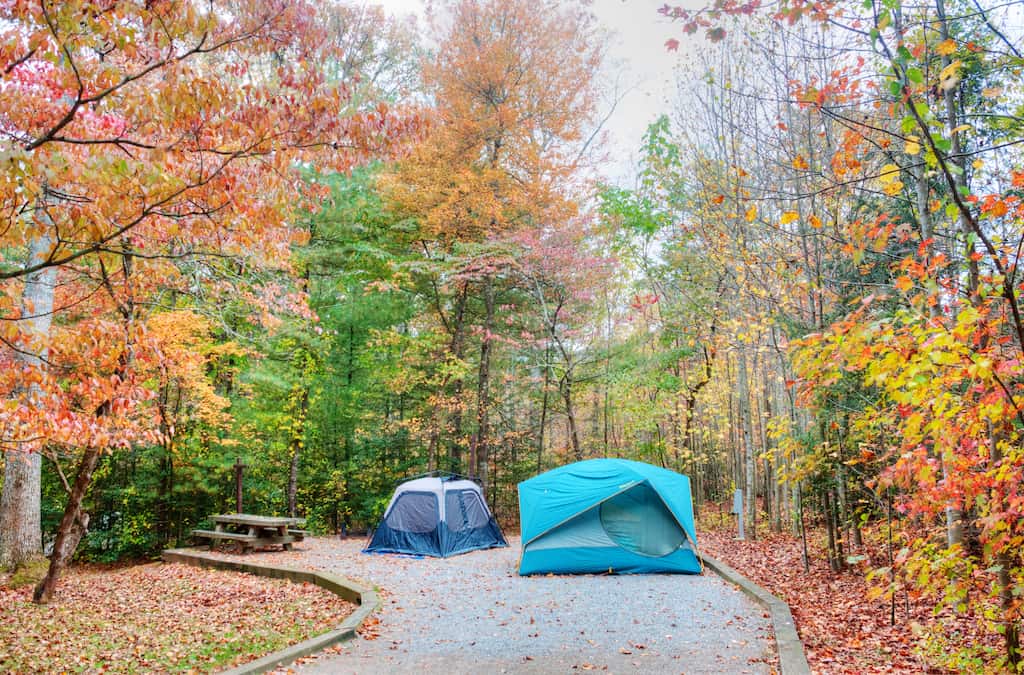
Camping at one of these gorgeous spots is the way to go if you want ot spend lots of time outdoors (and save a little cash).
An Overview: Blue Ridge Parkway Camping from North to South
Here’s an overview of all your camping options. My two favorite campgrounds on the Blue Ridge Parkway were Peaks of Otter and Mount Pisgah. They were beautiful, with great nearby hikes.
Otter Creek Campground (milepost 60.8): At 777 feet, this is the lowest elevation campground on the Blue Ridge Parkway. Creekside camping is available, and there are numerous day hiking opportunities that make this a perfect spot to spend a few days if you aren’t too anxious to get on your way.
You can reserve 39 sites beforehand, and the other 30 are first-come, first-served. Sites are spacious and open but do not provide much privacy. It’s rustic, but I felt very safe camping here alone.
Peaks of Otter Campground (milepost 85.9): Peaks of Otter Campground is nestled between two mountains, with great hiking opportunities. It’s a large campground carved into the mountain, with 63 reservable sites and 79 first-come, first-served.
The Peaks of Otter Lodge and Restaurant are both within walking distance, as is Abbott Lake, which is a great local fishing spot. Sites are shaded and fairly close together and include a picnic table and fire pit. While this isn’t a great campground for big rigs, it was one of my favorites for tent camping!
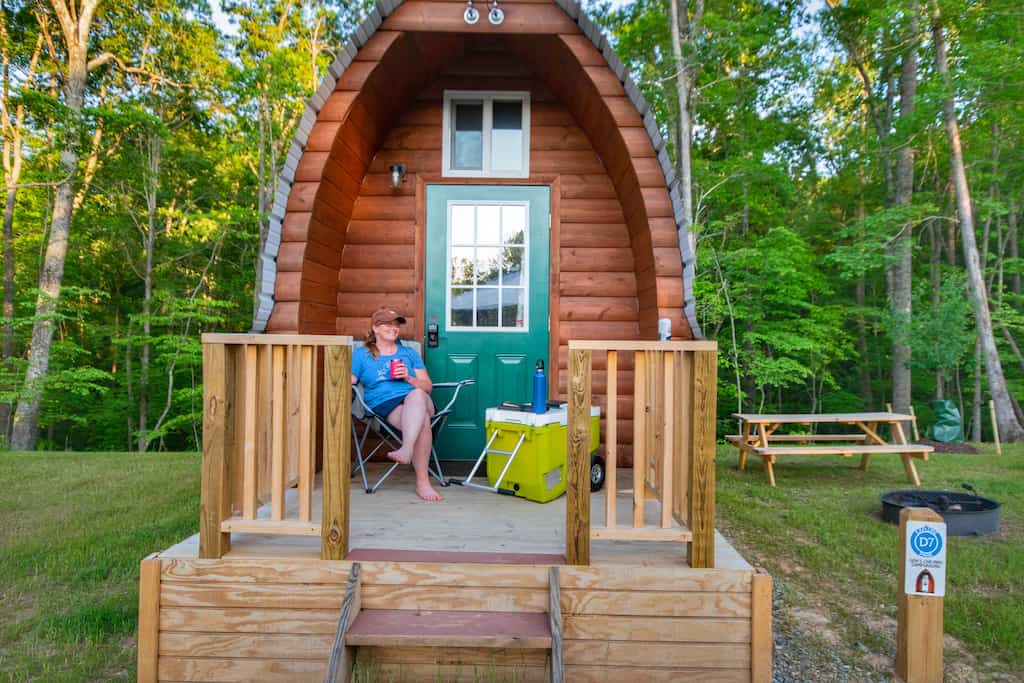
Explore Park (milepost 115): This is the only campground directly on the Blue Ridge Parkway that isn’t run by the National Park Service. Instead, it is run by Roanoke County and features a variety of camping options, including tent and RV sites, cabins, and yurts. Prices range from $15 to $100 per night.
I chose a little glamping cabin here, and it was a nice reprieve from tent camping. I even had a coffee maker and electricity!
Rocky Knob Campground (milepost 167.1): This is a great campground for folks who want to explore Rock Castle Gorge or Black Ridge Trail. There are 41 reservable tent/RV sites and another 67 that are first-come, first-served.
If you are a tent camper, you will appreciate the quiet atmosphere of the C-loop, but all of the sites are pretty close together. There are usually sites available throughout the season.
Doughton Park Campground (milepost 239.2): The Doughton Campground is located on both sides of the parkway, with 129 reservable sites. There is also a group fire circle and a camp store. This is a great location for spotting wildlife along the trails. The campground is relatively quiet, and the sites, while close together, offer a bit of privacy.
Julian Price Campground (milepost 296.9): With 197 sites, this is the largest campground on the Blue Ridge Parkway and one of the only Blue Ridge Parkway campgrounds with showers. If you can, try to get a campsite on Price Lake, and you’ll be treated to fabulous views from your tent. Canoes and kayaks are available for rent, and there is a dock for fishing, but unfortunately, swimming isn’t permitted.
Linville Falls Campground (milepost 316.4, currently closed): This is definitely one of the Blue Ridge Parkway campgrounds I would recommend reserving. There are 39 sites, but only 15 of them can accommodate large RVs.
The rest suit tents, small RVs, and campervans. Do not expect privacy at any of the sites. It’s the price you pay for being so close to Linville Falls and all the fabulous nearby hiking trails. Linville Falls Campground was a little too crowded for my liking.
Crabtree Falls Campground (milepost 339.5, currently closed): Most of the sites at Crabtree Falls Campground can be reserved, and it’s generally easy to find a spot. Like most Blue Ridge Parkway campgrounds, this one has basic amenities, and the sites are pretty small with little privacy. The hike down to Crabtree Falls is the only real recreational opportunity, but the falls are worth checking out.
I spent one night here in July and met lots of other travelers, but I probably wouldn’t stay again.
Mount Pisgah Campground (milepost 408.8): Mount Pisgah Campground was my favorite camping spot on the Blue Ridge Parkway. At 4,980 feet, it’s also the highest campground on the parkway. There are 124 sites, but they are spacious and offer privacy. Hiking is fabulous here, too, and don’t forget to check out nearby Asheville if you’re looking for urban adventures.
Tips and Resources for Blue Ridge Parkway Camping
- You can reserve many campsites in advance here. You can reserve your site up to six months in advance.
- Sites are $30 per night.
- Showers are not available except at Julian Price and Mount Pisgah campgrounds.
- Only heat-treated firewood is permitted in the campgrounds, and you can buy firewood onsite.
- Each site has a fire ring and a picnic table.
- Backcountry camping is only permitted at designated campsites in Rock Castle Gorge, Basin Cove, and Johns River Road.
- Leashed dogs are permitted in all campgrounds.
Dogs are Permitted on all Blue Ridge Parkway Trails and in Campgrounds
We are huge supporters of dog-friendly travel, but many national parks do not allow dogs on hiking trails. Fortunately, for all you dog lovers out there, the Blue Ridge Parkway is an exception.
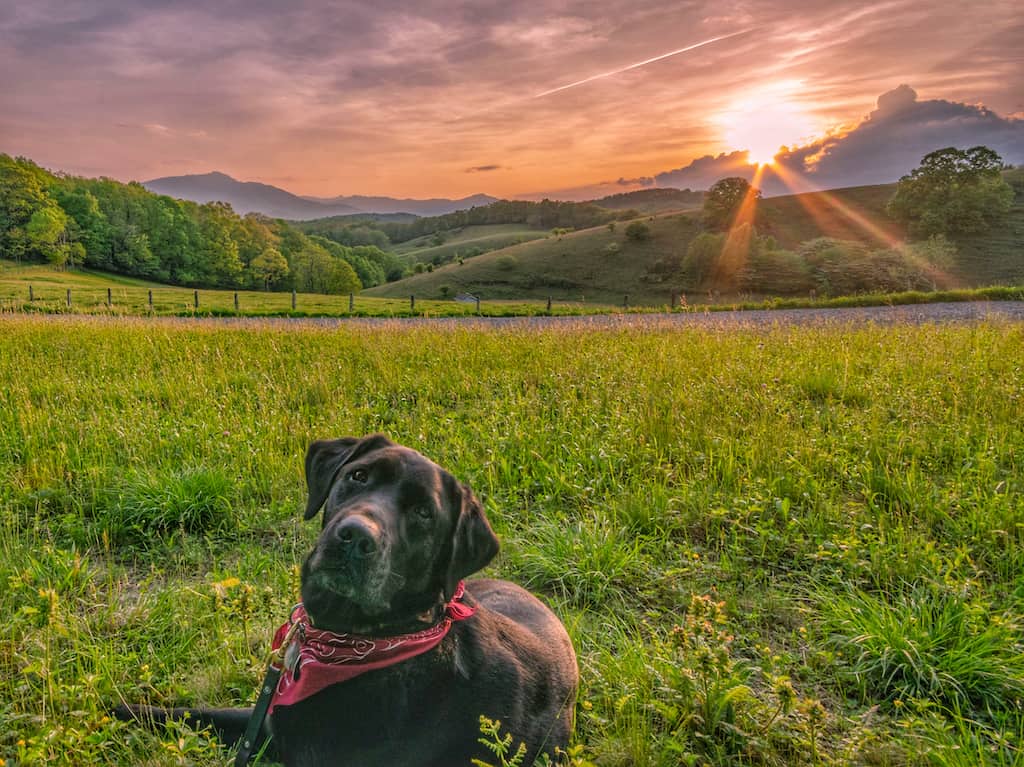
Dogs are permitted on hiking trails and in campgrounds, but they must be kept on a leash no longer than six feet. Our black lab, Flynn, loves hiking and exploring the Blue Ridge Parkway!
Be Sure to Obey the Speed Limit
The Blue Ridge Parkway is not the place to test your car’s top speed. This is bear and deer country, and you will likely see lots of pedestrians as well.
The speed limit on the Blue Ridge Parkway is 45 mph in most places, but it occasionally drops to 35 or 25 mph.
Enjoy this magnificent road trip, and you’ll understand why we love the Blue Ridge Parkway so much!
Follow us on social media for more nature-inspired vacation ideas!