
Fall Camping Tips From a Northeast Camper Who Refuses to Pack It In
Note: Advertising is how we keep this site free for you to enjoy, and we earn a commission from affiliate links that may be included in this post. Thank you for supporting Back Road Ramblers!
If you love camping in the summer, but reserve fall for cozying up indoors with a good book, listen up — Fall camping is amazing!
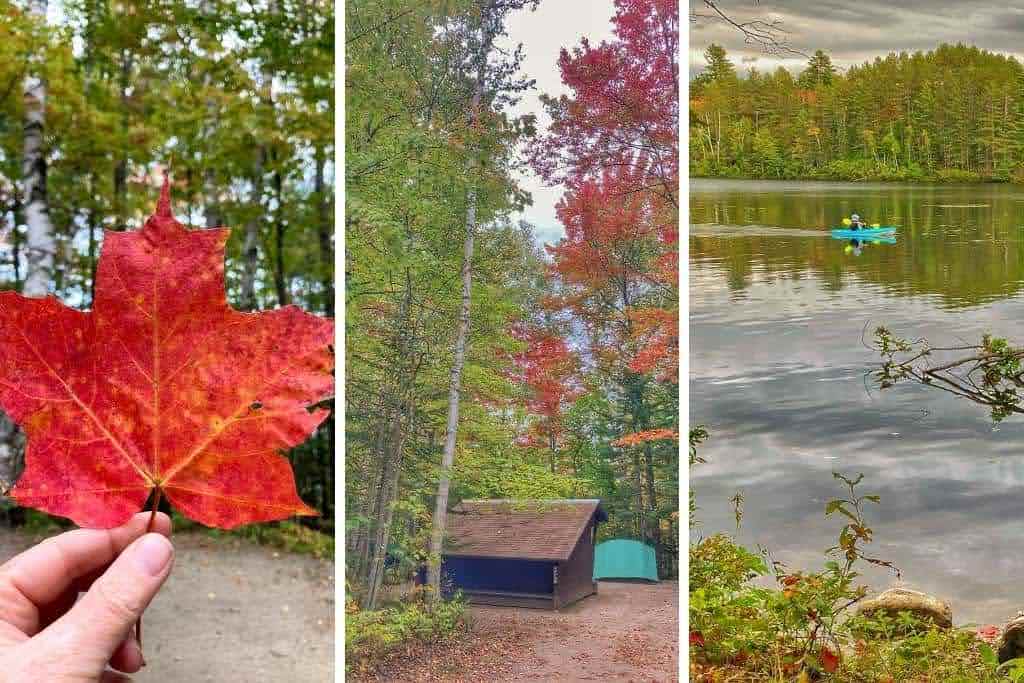
There are no bugs, no crowds, and the sun sets early for awesome stargazing.
And then there’s leaf-peeping.
Crisp, cozy mornings.
Woolly sweaters.
The peace and quiet of fall camping totally rival the frantic pace of summer camping. And I’m counting down the days!
Yes, camping in the fall means chilly nights, but you can handle it, I promise, especially if you read our fall camping tips before heading out on your adventure.
Ready? Let’s go camping!
Table of Contents
Why Fall Camping Beats Summer
Think about all the things you love about fall: crunchy leaves under your boots, woolly sweaters, crisp, cool days, and mulled cider, to name a few.
Now think about how you can enjoy those things to the fullest. A fall weekend camping trip is just the thing, I promise.
So, just to remind you why camping in the fall rocks, here are some reasons to get out there:
- You won’t be a sweaty mess when you go for a hike. Cool fall temps are so great for hiking big peaks.
- No mosquitoes!!
- Early campfires. Want to stay super warm and toasty in the evenings? Try some of our favorite hot drink recipes, both kid and adult versions.
- Later sunrises. If catching a sunrise is on the agenda, you will be comforted knowing it’s not as early as it was in the summer.
- No noisy neighbors. Actually, you may not have any neighbors. Fall campground campers can choose from all the very best spots available, as there’s very little competition.
When and Where to Go Fall Camping
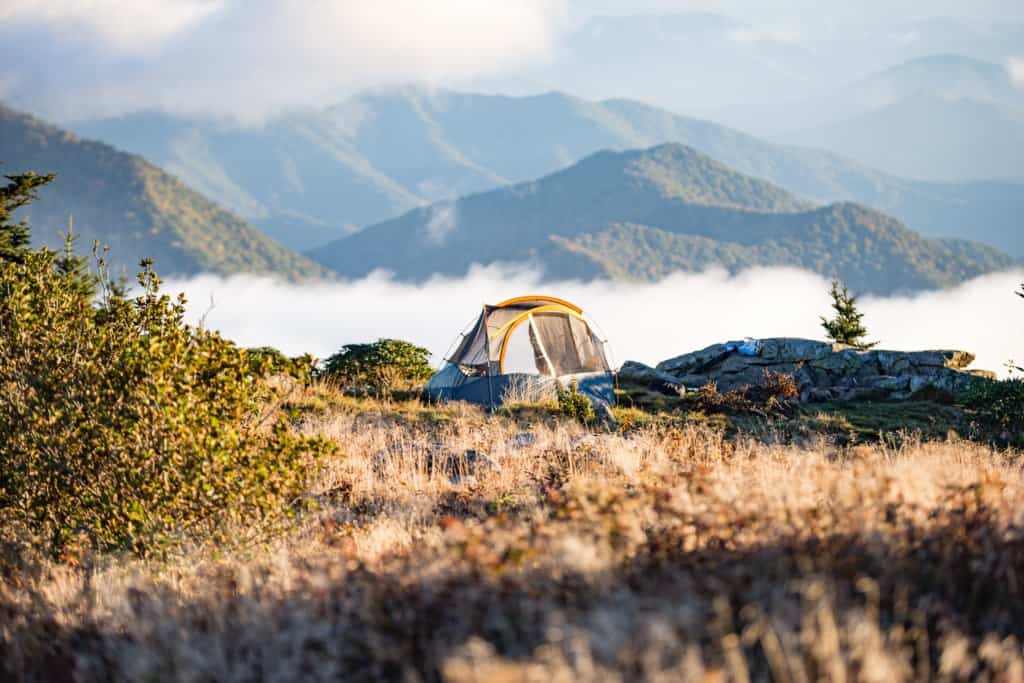
That’s the million-dollar question, isn’t it?
If you’re like me and you live in the Northeast, you’ll find that most campgrounds close around mid-October. The exception is national forest campgrounds, which are often open year-round.
I’ve got a few suggestions for fall camping in New England if you’re looking for amazing fall foliage without the crowds.
There are so many national parks that are perfect for fall camping, too.
If you don’t want super cold-weather camping, stick to parks in the lower elevations, as parks like Glacier, Yellowstone, and the Tetons may already have snow.
Our favorite national parks for fall camping are the Utah National Parks, Joshua Tree National Park in California, Theodore Roosevelt National Park in North Dakota, and Shenandoah National Park in Virginia.
National Forests are great affordable options for fall camping, and you can often find amazing national forest campgrounds near popular national parks.
How to Time Peak Foliage for Fall Camping
When to camp is a little trickier to nail down, especially if you’re hoping to time your trip with peak fall foliage in different regions. I can give you an estimate, but Mother Nature doesn’t always look at the calendar. I love this interactive fall foliage map from the Old Farmers’ Almanac for planning.
Here are some fall foliage estimates for popular regions across the United States. Remember to treat these windows as starting points, not promises. Foliage timing swings a week or two in either direction every year, depending on summer rainfall and how quickly temperatures drop, so a dry August or a warm September can throw the whole schedule off.
Before you commit to dates, check the prediction map I linked to above, and, if you can, call the local ranger station. A real person who’s looking out the window will tell you more than any map.
| Region | Peak Foliage Window | Where to Look |
|---|---|---|
| Rockies & West | Mid-September to early October | Colorado and Utah aspen groves, San Juan Mountains |
| Northeast (New England) | Late September to mid-October | Green Mountains (VT), White Mountains (NH), Maine |
| Midwest (Great Lakes) | Early to mid-October | Michigan’s Upper Peninsula, Door County (WI) |
| Pacific Northwest | Early to mid-October | Washington’s Cascades, Oregon’s Columbia River Gorge |
| Mid-Atlantic | Early to late October | Catskills, Poconos, Shenandoah, Blue Ridge Parkway |
| Southeast (Smokies) | Mid-October to early November | Great Smoky Mountains, Asheville (NC) |
| California | Mid-October to early November | Lake Tahoe, Sierra Nevada, Big Sur |
Fall Camping Gear You Actually Need
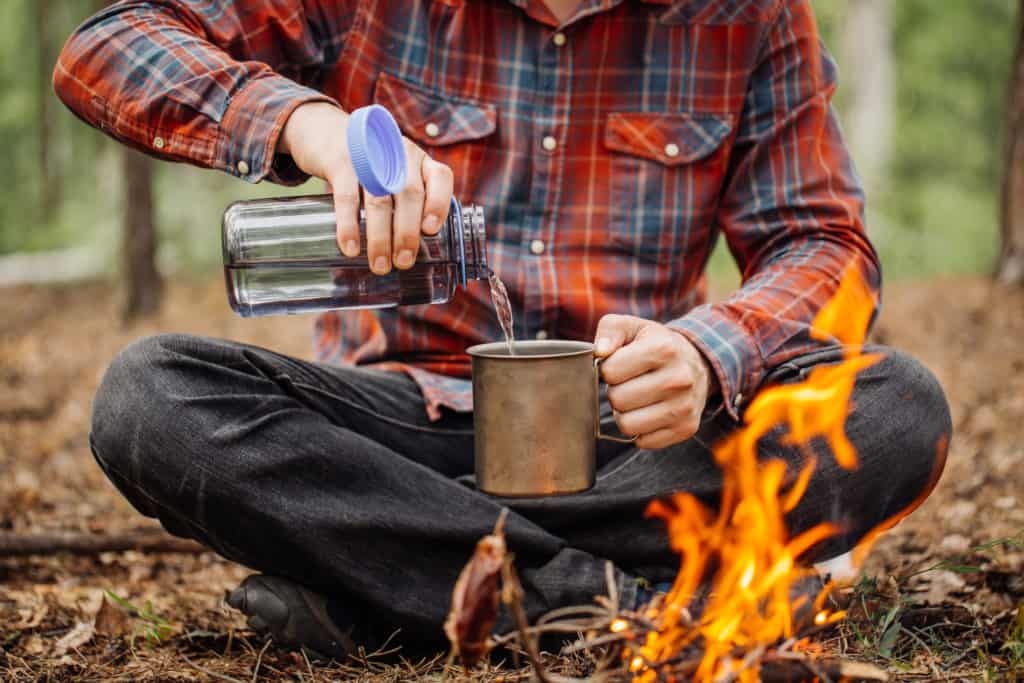
If you are a summer camper, then you’ve already got most of the gear that you need. Just keep in mind that fall weather can change quickly, moving from warm and sunny to cold and rainy in the course of a day.
Whether you are tent camping, camping in an RV, or luxuriating in a camping cabin, the most important things to think about are staying dry and warm.
In addition to your shelter: tent, RV, cabin, etc., here’s what you need to pack for fall camping gear.
A warm sleeping bag and pad. This is the single most important element to keeping you warm in your tent on a cool fall night. Most sleeping bags have a comfort temperature rating to help you plan for cool nights. Sleeping pads are designed to provide comfort and warmth while camping and are rated with an R-value, which indicates how well they insulate you from the cold ground.
Invest in a warm, high-quality sleep system, and you will love fall camping. You just may not want to get out of bed in the morning. Here’s a great article on R-values for sleeping pads and an overview of my Sea-to-Summit sleep system for women, which is super amazing for three-season camping.
Cooking gear: Fortunately, your camp kitchen won’t change too much from summer to fall. You may be doing more cooking over your campfire and less over your camp stove, but your basic gear won’t change. Here’s a complete camp kitchen gear list —everything we pack, spring, summer, and fall.
First aid kit: You’ll need a first aid kit no matter what season you’re camping in. In your fall camping first aid kit, you can add hand and foot warmers as well as a few mylar emergency blankets. If the temperature drops too low, you can put the warmers in your socks and spread the emergency blanket on the inside roof of your tent to reflect heat.
Insider tip: Keep hand warmers next to your phone in your pocket so your battery lasts longer.
Bug spray and sunscreen: You won’t likely find many mosquitoes on your fall camping trip, but fall is a busy season for ticks. Ticks are active in all 50 states, so be vigilant because they’re nasty critters. We’ve got some tips for preventing tick bites here.
A kitchen tarp: This is listed in our camp kitchen guide, but I wanted to mention it here too. Rain is common in the fall, so the first thing you should do when you set up camp is set up a tarp or two to keep your cooking area dry.
We have been using the Kelty Noah’s Tarp 12 for 10+ years, and it has saved countless camp meals! We set it up right over our picnic table. When the weather is nice, we flip one side over the other to soak up the sunshine.
What to Wear: Layering for Fall Camping
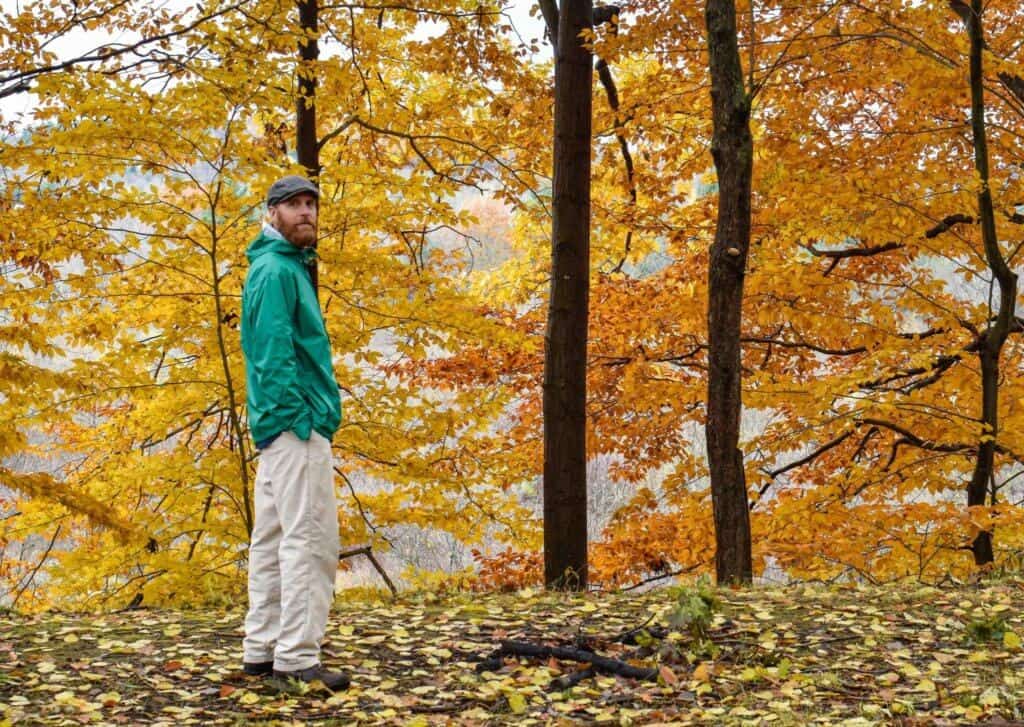
One word will describe your fall camping wardrobe. Layers. They will go on and come off over the course of your trip, which is exactly what you have them for.
There’s a bit of an art to layering, but I usually wear three layers first thing in the morning and peel them off as the day wears on. Here’s an overview of the fall layers you need for your camping trip.
- Wool socks: We wear wool socks year-round. In the fall, we opt for full-cushion wool boot socks by Darn Tough Vermont. Not to be salesy, but these are the only brand of socks we buy, and we can’t recommend them enough. Made in Vermont. Lifetime guarantee. Nuff said.
- Woolly Layers: Merino wool layers are the best thing ever invented! I start with Merino wool underwear from Woolx. Nope, it’s not itchy, and it’s odor-resistant, anti-microbial, and it wicks sweat away from your body. Next, I add a base layer (Woolies Pro Tech by Ibex).
- Hiking pants: On fall camping trips, I pretty much switch between hiking pants and fleece pants (below).
Fleece pants: Fleece pants work really well over a base layer and are great for warming up on chilly days. These sherpa-lined sweatpants are like wearing PJs, but better.- Wool sweater – Fleece works up top, too, but I prefer a thin wool layer because it stuffs into my backpack better than fleece.
- Waterproof layer – A rain jacket is a must for fall camping trips. If you’re buying new, order a size up so that you can layer your waterproof layer over a sweater.
- Puffy layer – Throw a down puffy into your bag for mountain summits and cold nights in your tent. Just don’t get it near the campfire. I made that mistake once, and there were feathers everywhere.
- Wool hat and gloves – Especially useful for early mornings when the campfire is just getting going, but you still need to prep breakfast and make the coffee. Turtle Fur is based in Vermont, and we love their collection of warm hats. These fleece gloves from Columbia are so warm (and affordable).
- Waterproof boots and camp shoes – My absolute favorite pair of boots for fall/winter are made by Oboz. The Oboz Bridger 7” insulated waterproof boots have totally changed the way I do cold weather. They are the perfect mix of fuzzy slippers and super-rugged hiking boots. They make me feel invincible on slippery trails. And warm. I could sing their praises all day, but I won’t. Just get some before winter. For kicking around camp, you may want to add a pair of fleece-lined Crocs to your pile of gear.
Fall camping with little ones? We’ve got a separate post for layering babies and toddlers in cold weather.
Setting Up Camp When the Temperature Drops
In summer, you can throw your tent up just about anywhere and be fine. Fall is a bit less forgiving.
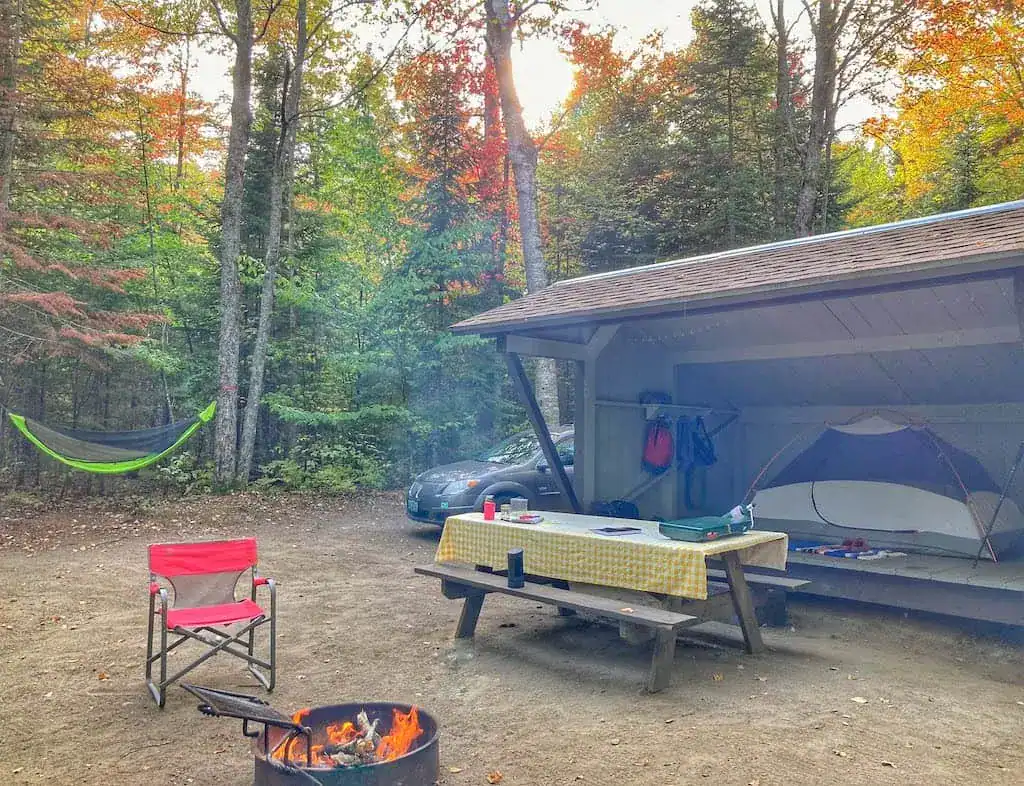
Where you pitch and how you set up make the difference between a cozy night and one where you’re awake at 3 am wondering why you do this to yourself. Here are some tips for making your camp cozy and livable on your fall camping trip.
Get to camp with daylight to spare. The sun sets early in the fall, and setting up a tent by headlamp in the cold is nobody’s idea of a good time. I aim to arrive with enough light left to pitch the tent, gather firewood, and start dinner before dark. In the Northeast, that’s around 4 pm, or even earlier if I can swing it. Bonus: you get to scope out where the bathroom is before you’re stumbling toward it in the dark.
Pick your site for warmth, not just the view. Cold air sinks and pools in low spots, so a site on slightly higher ground will be warmer overnight than one tucked in a hollow or down by the water. If wind is in the forecast, put something solid between you and it: a stand of trees, a boulder, or even your car. And don’t forget to look up before you commit. Skip any site with dead branches hanging overhead, since those “widowmakers” come down in the kind of wind autumn likes to throw at you.
If frost is likely, try to pick a site that catches early morning sun. It’ll thaw your tent faster and dry off the dew while you’re making coffee.
Pitch for ventilation, even when it’s cold. A little airflow keeps the inside drier, which keeps you warmer than a sealed-up, clammy tent.
Set up a covered hangout before you need it. Rain shows up fast in the fall, so you might as well count on it. The first thing I do after the tent is up is string a tarp over the picnic table so there’s a dry place to cook and sit no matter what the sky does. My go-to tarp is the Kelty Noah’s Tarp. We’ve been together for 12 years and counting!
Don’t forget lighting. Once it’s dark, it’s dark, and fall brings nightfall early. I set up a lantern or string lights before sunset rather than fumbling for them after dark. Reflective tape or bright guylines on your stakes are worth the few seconds it takes, too, since a tripped tentline in the dark is a fast way to end an evening.
Tips for Staying Warm in Your Tent
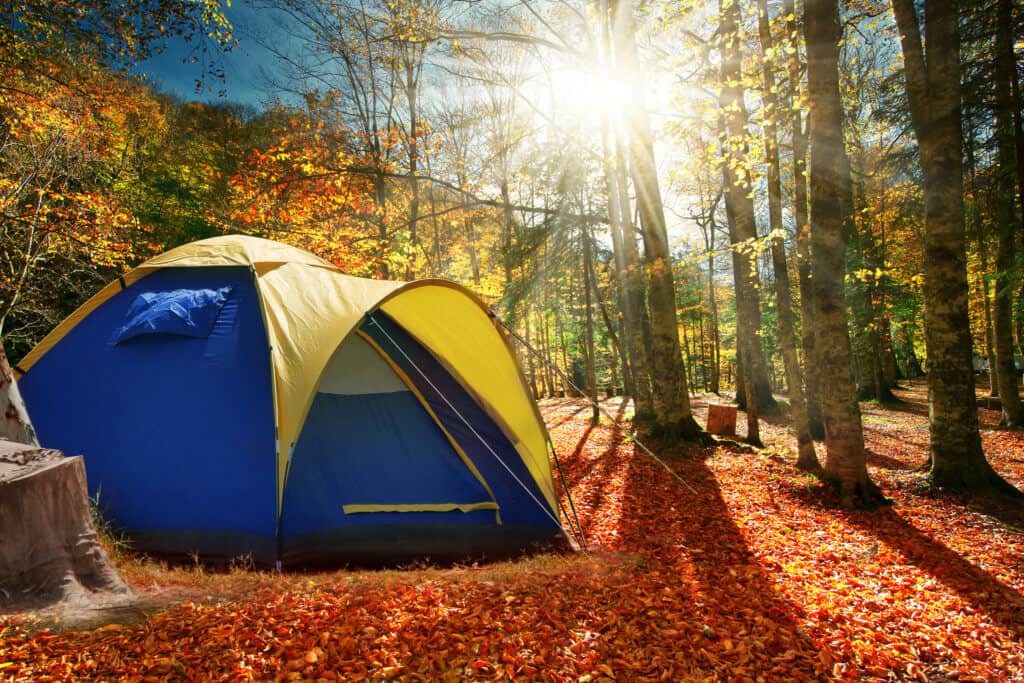
If you invest in a good sleeping bag and pad, you’ve already won half the battle. You’ll likely stay super warm all night during your fall camping trip. But just in case the thermometer really drops while you’re out there, here are a few more tips that we’ve found useful over the years.
- Share your body heat. Invite your favorite sleeping partner to snuggle up. As long as they’re warm-blooded — dog, child, or partner- you’ll be cozier than sleeping alone.
- Use a hot water bottle. Heat up some water over your campfire before bed. When it’s time to turn in, pour it into your Nalgene bottle and tuck it into the bottom of your sleeping bag for toasty toes.
- Do some jumping jacks. Think it’s warm sitting around the campfire? That’s external heat that will totally disappear as soon as you walk toward your tent. Make your own heat by taking a minute to do jumping jacks or another type of exercise before hitting the sack.
- Use an emergency blanket to reflect heat. You can drape it over your sleeping bag if it’s really cold, or tape it to the inside of your tent’s ceiling.
Fall Camping Activities Worth Leaving the Sleeping Bag For
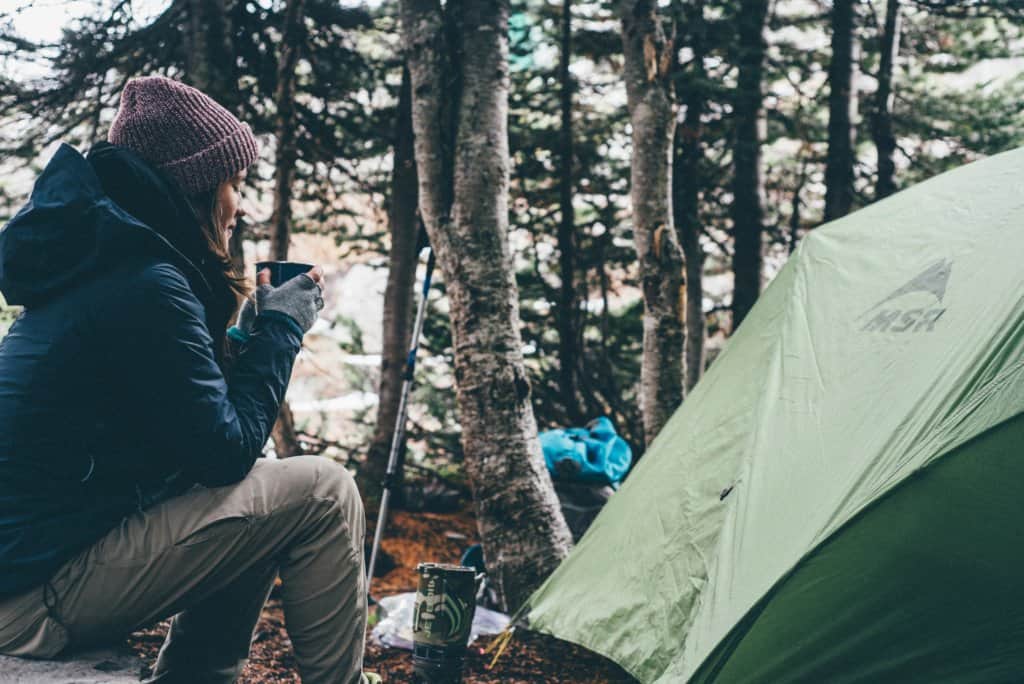
Camping is an activity in and of itself, but in case you need some more ideas for what to do on your fall camping trip, here ya go!
- Go geocaching. I’m still obsessed with geocaching even though my kids are grown up and don’t do it with me anymore. It’s basically an outdoor treasure hunt using the GPS on your phone. You can go geocaching in every season, but fall is great because some of the growth has died back a bit, so you aren’t bushwacking to find your cache. If you don’t know anything about geocaching, start here. Or just download the Geocaching app and have fun!
- Play with your camera. Fall foliage is one of my favorite things to photograph, year after year. What I love about fall camping is that I have all the time in the world to play around and experiment. I almost always bring a tripod for night shots, plus a waterproof camera cover in case of rain.
- Go canoeing or kayaking. Fall paddling is pretty special. There’s just something about the colorful trees reflected in the water. Choose a warm day with lots of sunshine, pack a picnic, and head out on your favorite lake or pond.
- Go bird watching. You don’t have to be an expert birder to enjoy bird watching, especially in the fall. Many birds are preparing for long migrations, and as the leaves start to fall, they are easier to spot. If you are new to birdwatching, download an app like Merlin to help you with identification. We also have a comprehensive article about birdwatching with kids, which is useful even if you don’t have kids.
- Carve pumpkins. What better place to embark on a super messy craft than out in the woods? Pick up some pumpkins before your fall camping trip, and don’t forget a newspaper, serrated knives, and some big spoons. The best part? You can cook your pumpkin seeds over the campfire. Just rinse the seeds before cooking them in a few tablespoons of oil with seasonings in a cast-iron skillet. They’re so good!
- Play Ghost in the Graveyard. If you’re camping with a crowd that involves some kiddos, this is a super fun game, especially if you are camping in a forest where there are lots of hiding spots. It’s a twist on hide-and-seek and great because you don’t need any extra equipment, just a group of fun-loving campers. If you’ve never played (or it’s been a while), here’s an overview of the rules.
Staying Safe in Fall Weather
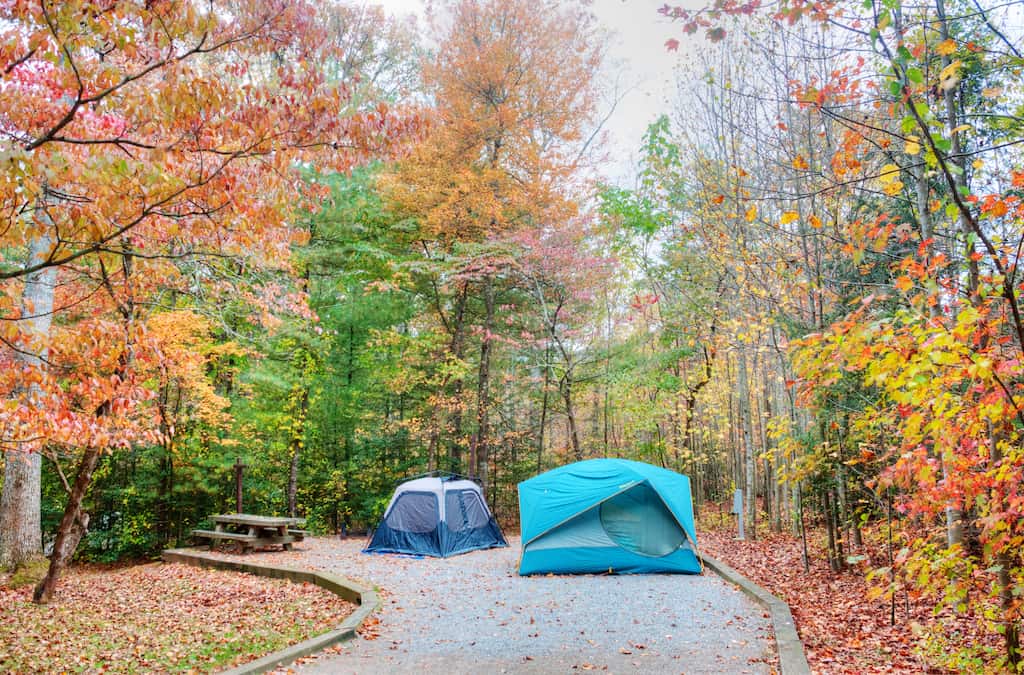
As awesome as fall camping is, it’s also worth a little extra caution. The same cold that makes the season cozy turns into a problem if you get wet, lose the light, or ignore a forecast that’s going sideways.
Watch the forecast, then keep watching it. Fall weather is unpredictable, so checking once before you leave isn’t enough. I check the extended forecast at home and then again every morning at camp. If you’re out of cell range, a satellite messenger or weather radio earns a spot in your pack (or car). A warm, sunny afternoon can hand you a freezing, wet night without much warning this time of year.
Stay dry. Damp clothes pull heat away from your body faster than cold air does. Wear moisture-wicking layers, pack real rain gear even when the sky looks clear, and ventilate your tent to reduce condensation. The rule I try to always follow: if I get wet, I change immediately. Dry socks are not a luxury; they’re a safety item.
Know the signs of hypothermia. Shivering, slurred speech, clumsy hands, and a foggy, can’t-quite-think-straight feeling are all early red flags. If you or anyone in your group starts showing them, act right away. Get dry, get into warm layers, get something hot to drink, and warm up before it gets worse. Don’t tough it out or wait to see if it passes.
Keep your batteries warm. Cold drains batteries quickly, and a dead headlamp or phone in the dark is more than an inconvenience when the temperature’s dropping. I stash my phone, headlamp, and power bank in my sleeping bag overnight or wrap them in a layer of clothing. They’ll hold their charge far better than if you leave them out in the cold.
Stay hydrated. It’s easy to drink less when you’re not sweating, but cool, dry fall air pulls moisture from you all the same, and staying hydrated helps your body regulate its temperature. An insulated bottle keeps your water from going icy, and on the coldest nights, it keeps it from freezing solid.
Have a bailout plan. Nobody wants to bail on a camping trip, but the point is to have fun, right? If you’re cold and miserable, you’re not having fun. What’s your plan for those miserable moments: a hot meal at a restaurant in town, a cabin or motel you could retreat to, or just packing up early? There’s no medal for suffering through a weekend you’re not enjoying. Just last week, we threw in the towel on a camping trip that had been on the books for a month. We drove home for a movie marathon instead!
Fall camping really is one of the best ways to explore and enjoy the outdoors!
Follow us on social media for more camping tips and ideas!

Nice write-up! I appreciate how the article explains the importance of having dependable camping gear.