Stop Paying Hotel Prices and Start Pitching a Tent for Your Family Road Trip
Note: Advertising is how we keep this site free for you to enjoy, and we earn a commission from affiliate links that may be included in this post. Thank you for supporting Back Road Ramblers!
Are you in the planning stages of your next vacation? Want to embark on a memorable journey without putting a huge dent in your wallet? You need a camping road trip!
Our family has been taking camping road trips for the past 20+ years, and it’s still our favorite way to travel. In this post, we’re going to explain why we love road trips so much, and we’ll spend some time trying to convince you to take one for yourself.
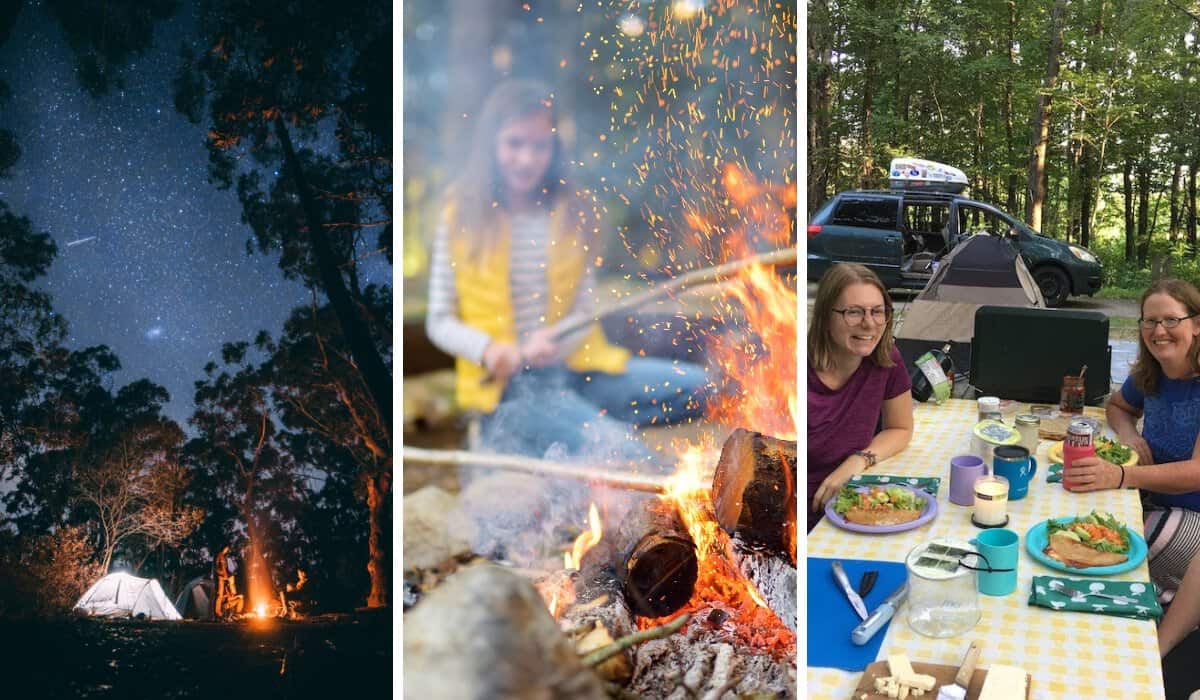
If we were to create an elevator pitch to promote camping road trips, here’s what we’d say:
Road trips provide flexibility, spontaneity, and self-sufficiency, allowing you to enjoy the journey as much as the destination.
Camping allows you to unplug, connect with nature and your family, and discover beautiful spots that aren’t necessarily on popular tourist tracks. Combining road trips and camping means that you have the freedom to explore without taking a massive hit to your bank account. You will stretch your dollar, your body, and your mind.
If you’re still reading and are open to the idea of a camping road trip, awesome. Now, we’ll dig a little deeper to convince you that this is one of the best ways to see the world (or at least the USA).
Why We Believe Wholeheartedly in Camping Road Trips
Camping Road Trips are Affordable
We started taking camping road trips because we didn’t have enough money for other types of vacations.
We had two young kids, a dog, and heaps of student loan debt. But we also had an urge to explore the world around us.
Camping was the obvious choice for a cheap vacation, and allowed us to claim a little slice of outdoor heaven for a whole weekend for less money than a cheap dinner in town.
Fortunately for us, we fell in love with the camping lifestyle, and even when we could afford a more expensive vacation, we chose to continue pitching our tent, cooking our meals, and making friends with our campground neighbors.
But isn’t camping equipment expensive?
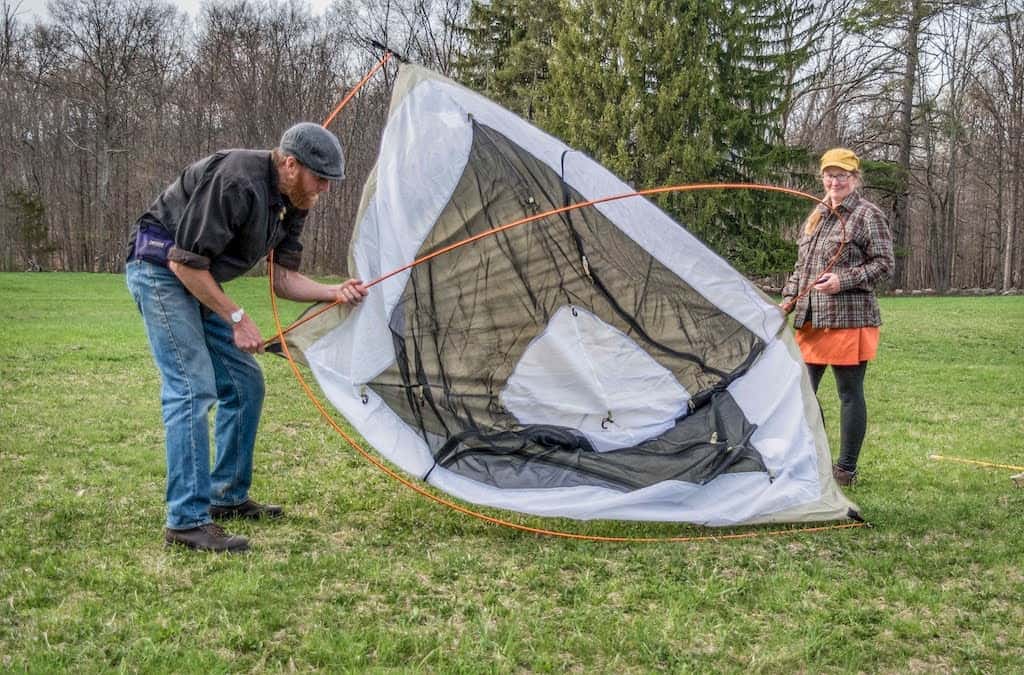
Camping equipment is an investment that gives back for years.
A decent two-person tent will set you back around $200, which is the cost of one night at a really nice hotel.
The tent will last for 5+ years of camping trips (ours is going on 12 years), providing shelter, warmth, and protection from the elements.
Here’s a rough breakdown of what you’ll need to get started camping and how much it will cost. We’re not talking fancy at this point. Just high-quality gear that will keep you comfortable outdoors.
For a more comprehensive list of what we bring on every camping road trip, read how to pack a small car for a big trip.
✓ Tent(s) – $150 – $500: The most obvious and most important piece of gear is your tent.
Before you start shopping, answer a few questions. How many people will be using it? Do you have dogs? Will you be camping in cold weather? Do you want to use your tent for just sleeping, or do you want room to hang out too?
We started camping with our kids when they were quite young, and we had a dog, so our family of four bought a six-person tent. We had room for everyone to sleep, read, play games, and more. As our kids grew, we switched to two tents: a three-person tent for the kids and the dog, and a two-person tent for Eric and me.
This is the set-up we still use. If I travel alone with the dogs, I take the three-person tent. If the kids go camping on their own, they take the two-person tent. This setup provides us with a lot of flexibility.
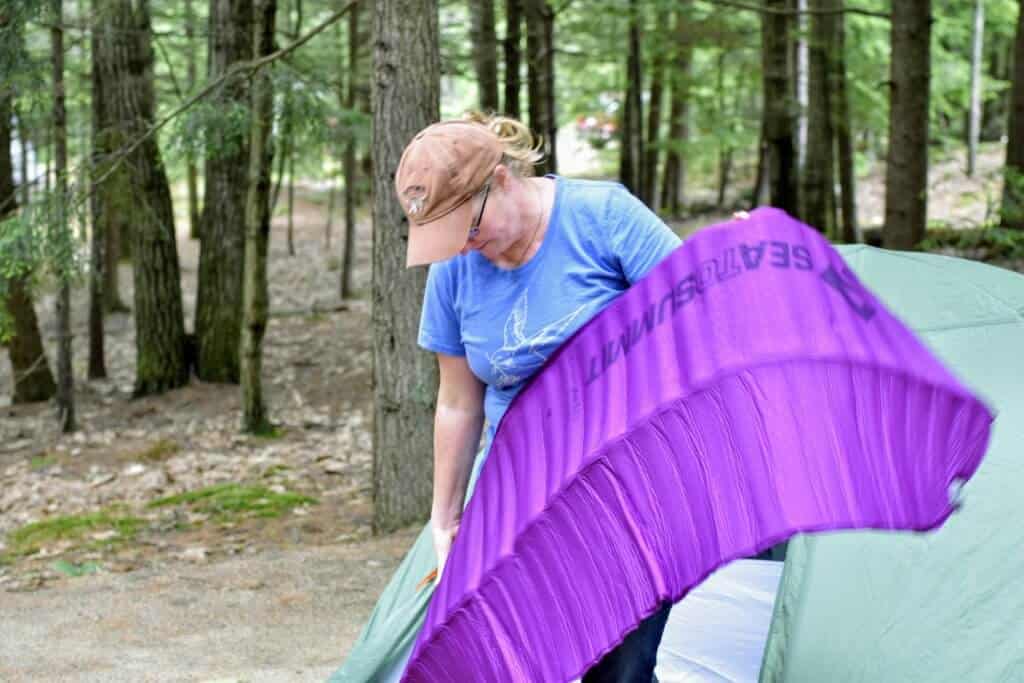
✓ Sleeping bags $150 – $400 each: After your shelter, your sleeping bag will probably be your biggest expenditure.
Look for a bag with a temperature rating appropriate to the conditions you will use it in. Down bags provide excellent insulation for very little weight, but they cost more. A bag with polyester filling will be cheaper, but heavier. We find that 30-degree bags provide plenty of warmth for three-season camping.
✓ Sleeping pads $30 – $200 each: Your sleeping pad will provide cushion and extra insulation when sleeping on the ground, and the pad you choose could make or break your camping experience. If you haven’t slept on a pad before, I recommend visiting an outdoor retailer to try one out.
Some are incredibly cushy, designed to provide maximum comfort. Others are designed to be extremely lightweight with just a bit of protection from the hard ground. Find your happy medium.
✓ Camp chairs: $30 – $150 each
✓ Lighting: Headlamps and a good lantern, $50
✓ Camping Kitchen: A camping stove, cookware, and tableware, $200 (total)
These are the basics that you’ll need for any camping trip and don’t include small incidentals.
While outfitting your family with good camping gear isn’t exactly cheap, you only need to do it once and can upgrade as necessary.
You can buy all the necessities for under $500 if you are frugal, and even if you buy the best of the best, your total will likely come in under $ 1,000. That’s equivalent to a frugal weekend at Disney.
Would you prefer a single weekend away or a lifetime of camping?
Campsites are way cheaper than hotels
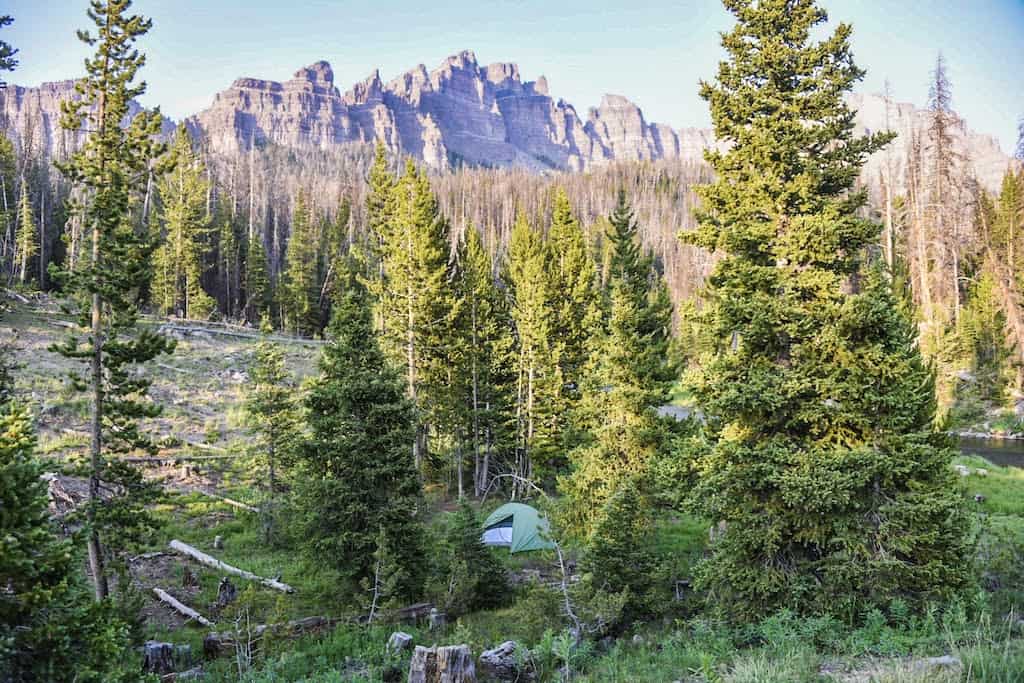
The cost of a night at a campsite in the USA ranges from free to $60+ and depends on whether the campground is public or private and on the amenities included in your stay.
Here’s a rough breakdown of cost based on the type of campground provided:
Bureau of Land Management or National Forest dispersed camping: Usually free. With this type of camping, the only amenity you’re likely to get is a composting toilet or privy. Be prepared to pack in your own water for drinking and washing. You probably won’t have a fire ring or picnic table either, so be prepared with a folding table and cookstove.
National Forest Campgrounds: Free to $20 per night. These campgrounds are pretty primitive but usually provide a picnic table, a fire ring, access to potable water, and a privy or composting toilet.
National Park Campgrounds: Free to $30 per night. Generally, when you stay in a national park, you have already paid an entrance fee, so the camping fee is on top of that and varies wildly between parks. Most campgrounds will have water, picnic tables, and fire rings, plus bathrooms with running water. Some sites will have bear lockers too, depending on the area.
State Park Campgrounds: $25 – $60 per night. Cost and amenities will vary from state to state and campground to campground, but you’ll often find that state parks have pretty stellar amenities, including all the basics, plus hot showers, laundry, a camp store with provisions, and more.
Private Campgrounds: $25 – $80 per night. With private campgrounds, you are more likely to find electric and water hookups at each site, swimming pools, game rooms, and playgrounds, but you will likely pay extra for these amenities.
Making Camp Meals is Easy and Affordable

After lodging, eating out is the quickest way to gobble up your travel budget.
When you prepare meals at camp, you are basically spending the same money on groceries that you do at home. You can keep it simple or go gourmet, depending on how much time and effort you want to put into your camp cooking.
We generally keep things pretty simple with an occasional fancy meal. Campground cooking does take some getting used to, but once you get in the groove, it becomes second nature, just like cooking at home. Here are some of our favorite camp cooking posts to help you get started.
- Your Amazing Car-Camping Kitchen
- The 10 Easiest Camping Meals for Families on the Go
- The Best Camping Meals Begin with an Awesome Spice Kit
- How to Wash Dishes While Camping
Also Read: The 10 Easiest Camping Meals for Families on the Go
Camping Road Trips Allow for Flexibility and Spontaneity
Like other types of travel, camping road trips do require some advance planning, but there’s a lot of flexibility too. You can wake up each morning and ask yourself, “Where should we go today?”
You can find an amazing camping spot with beautiful views or an awesome swimming hole and choose to stay for a few days to enjoy it.
Part of the excitement is finding new places without a strict itinerary to tie you down.
When we plan a big camping road trip, we make advance camping reservations for Friday and Saturday nights and for any popular spots we know we don’t want to miss.
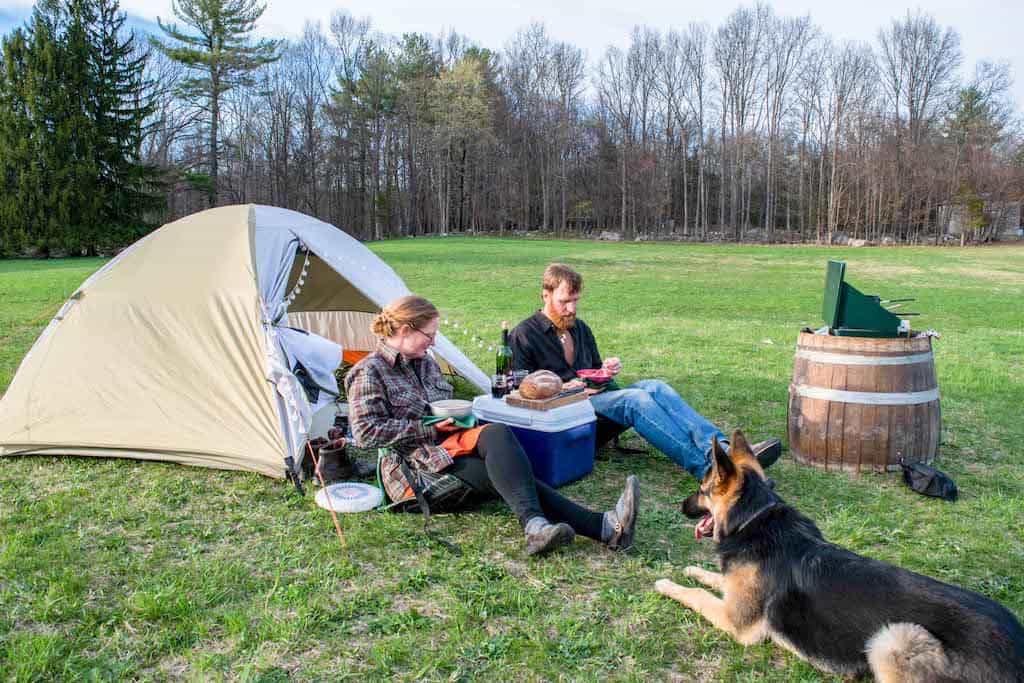
On weekdays, we rarely have trouble securing campsites, and some of our favorite camping experiences have been at places that we just happened upon, like this gorgeous national forest campground in Wyoming.
We were actually headed to a different campground, but saw the sign and decided to see if there were spots available.
A Camping Road Trip Means More Freedom for the Kids
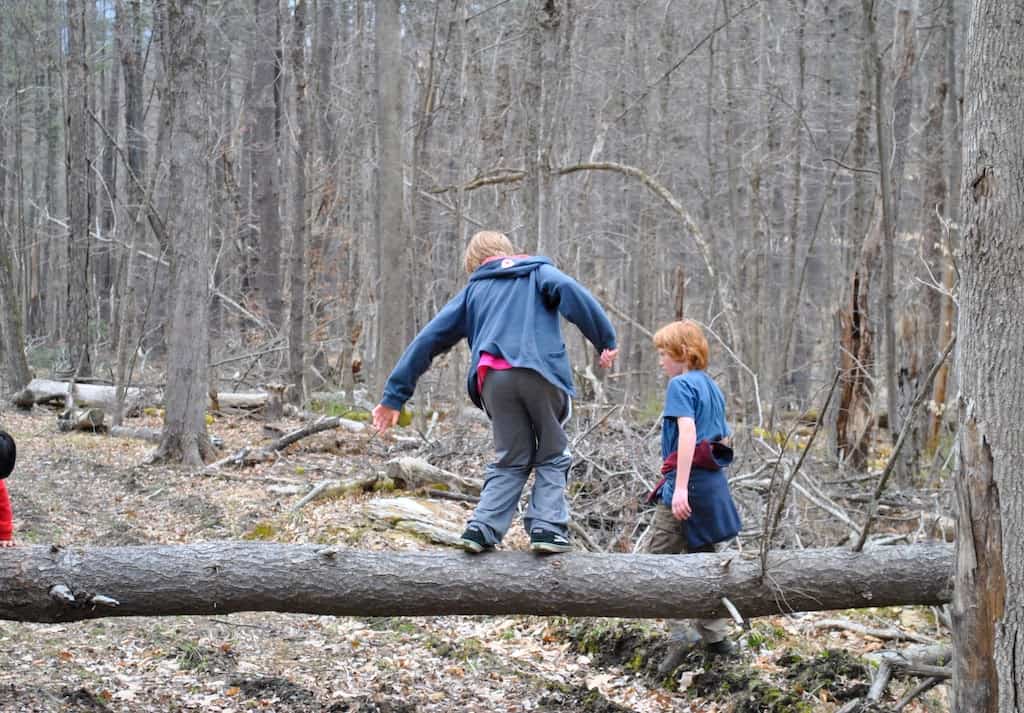
Campgrounds were made for exuberant kids!
There are trails to hike, fires to build, and streams to muck around in. After sitting in the car for an extended period, this is exactly what kids need.
Skip the stuffy hotel rooms and the polite restaurant conversations and embrace dirt, laughter, campfires, and nights under the stars. These are the days your kids will remember forever.
Follow us on social media for more outdoor inspiration!