Our Complete Guide to Joshua Tree National Park (2026)
Note: Advertising is how we keep this site free for you to enjoy, and we earn a commission from affiliate links that may be included in this post. Thank you for supporting Back Road Ramblers!
Joshua Tree National Park flawlessly combines otherworldly desert landscapes, incredible recreational opportunities for all abilities, and a colorful Wild West history, making it one of the most distinctive national parks in the United States.
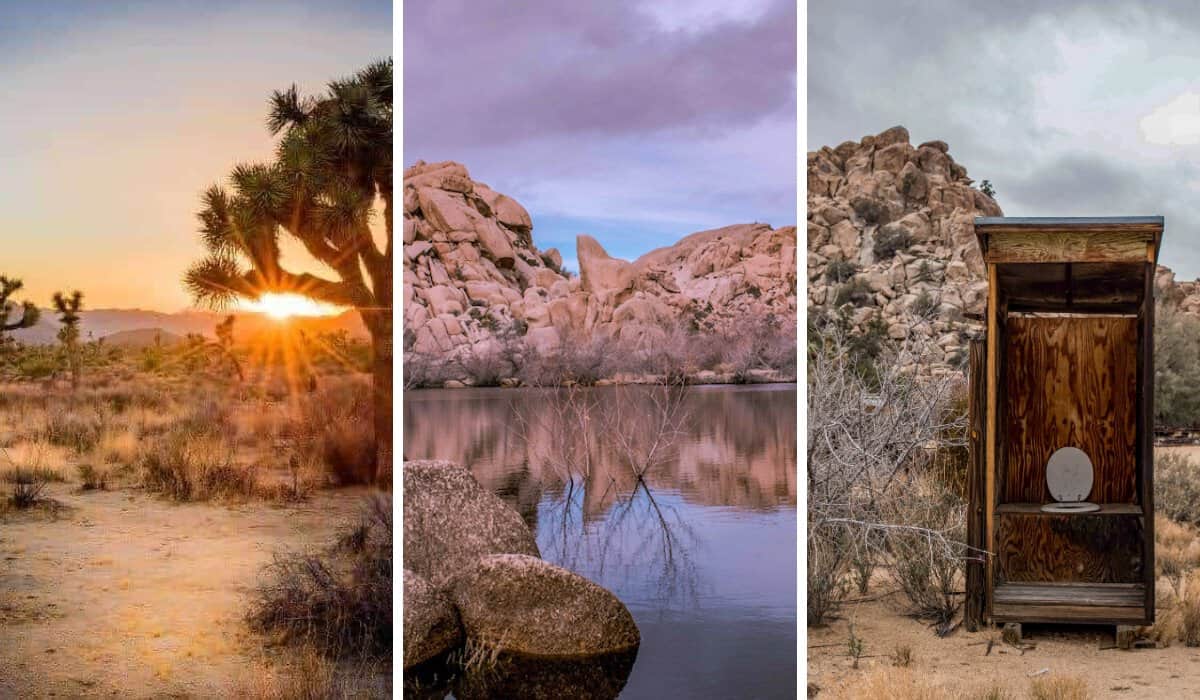
This incredible desert park sprawls across 800,000 acres of Southern California, where the Mojave and Sonoran Deserts collide, and there is always something new to discover, no matter how many times you’ve been.
I have been visiting Joshua Tree National Park for years and have explored the park in every season, with kids and without, camping under the stars at Jumbo Rocks and soaking in hot tubs at nearby glamping retreats.
I’ve hiked its trails in the snow, watched wildflowers bloom across the desert floor in spring, and stood under a sky so full of stars that it almost didn’t look real. It is, without question, one of my favorite places in the world.
This guide covers everything you need to plan an unforgettable trip to Joshua Tree, including the best things to do, where to hike (easy trails and challenging ones), where to camp and glamp, a 3-day itinerary organized by region, and practical tips drawn from many visits across every season.
At-A-Glance: Joshua Tree National Park
Location: Southern California, where the Mojave and Sonoran Deserts meet. The park is conveniently located within a day’s drive of many metropolitan areas: 140 miles east of Los Angeles, 175 miles northeast of San Diego,215 miles southwest of Las Vegas, Nevada, and 222 miles west of Phoenix, Arizona.
Size: 800,000 acres (1,235 square miles)
Open: Year-round
Best time to visit: October to April for comfortable temperatures.
Entrance fee: $30 per vehicle, valid for 7 consecutive days
Getting here: 3.5 hours from LAX, or 3 hours from Las Vegas (LAS)
Getting around: A car is essential; the park is vast.
Cell service: Unreliable throughout most of the park. Black Rock Campground is the only reliable exception.
Official park website
The Best Things to Do in Joshua Tree National Park
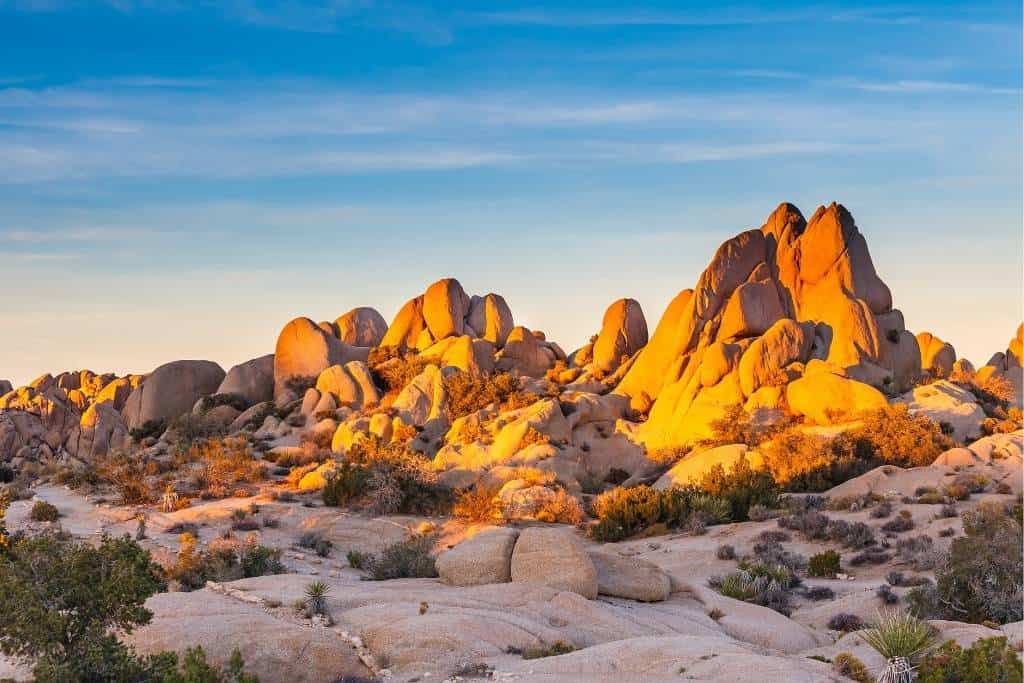
After visiting the park numerous times, I’ve compiled a list of tours, hikes, and adventures you need to add to your itinerary. I’ll categorize my favorite spots into a three-day Joshua Tree itinerary below.
Tour Keys Ranch (Desert Queen Ranch)
Before it was a national park, Joshua Tree was home to cattle rustlers, gunslingers, miners, and rugged homesteaders. Nobody thrived here more successfully than Bill Keys and his family, who lived at Desert Queen Ranch for more than 60 years, raising five children on perseverance, luck, and shrewd dealings.
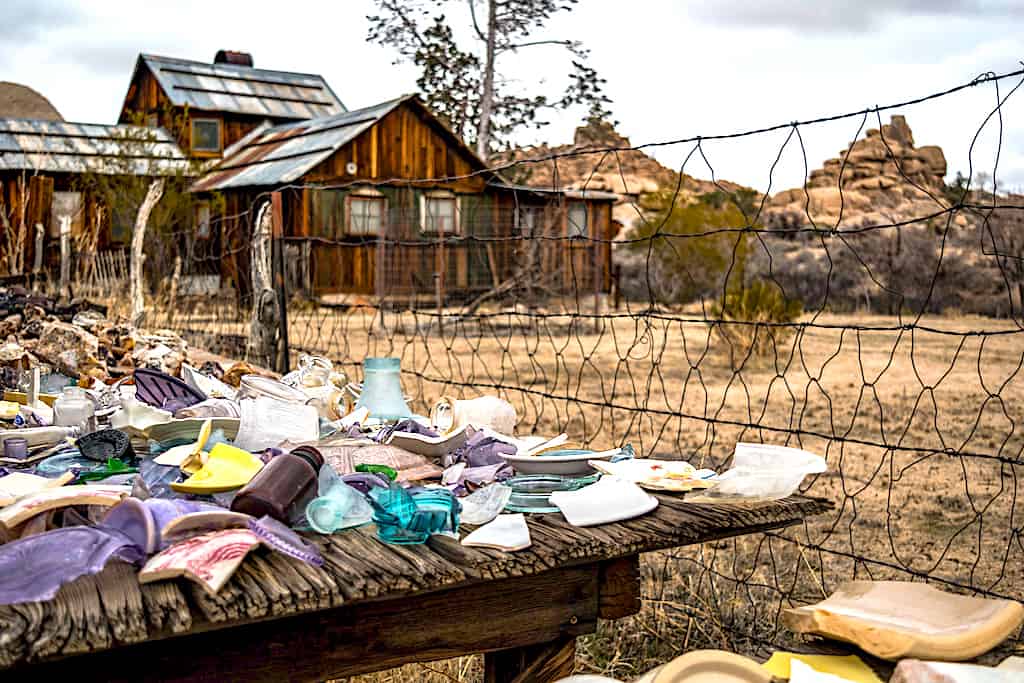
The ranch, owned and managed by the National Park Service, has been meticulously preserved and remains almost exactly the way it was left when Bill died in 1969.
The only way to visit this fascinating relic is on a ranger-led tour, and it is one of the best things I’ve done here. The ranger who led my tour had been taking visitors around Desert Queen Ranch for more than 10 years, and his stories about the Keys family were endlessly engaging, from Frances’s enormous garden and orchard to Bill’s infamous 1943 shootout with his neighbor, Worth Bagley.
You can’t go inside the main house, but you can peek in the windows and explore all of the outbuildings, old machinery, rusty artifacts, and crumbling structures. Photographers will be in heaven.
Keys Ranch Tour Details
When: October to April
Cost: $20 adults (12+) · $10 kids 6–11 and seniors
Duration: About 120 minutes · half-mile walk
Reservations: Required, up to 60 days in advance on Recreation.gov
Best for: History lovers, photographers, kids 10+
Watch the Sunrise and Sunset
Wherever you are in Joshua Tree, you’ll likely witness something spectacular at golden hour. These are my favorite spots:
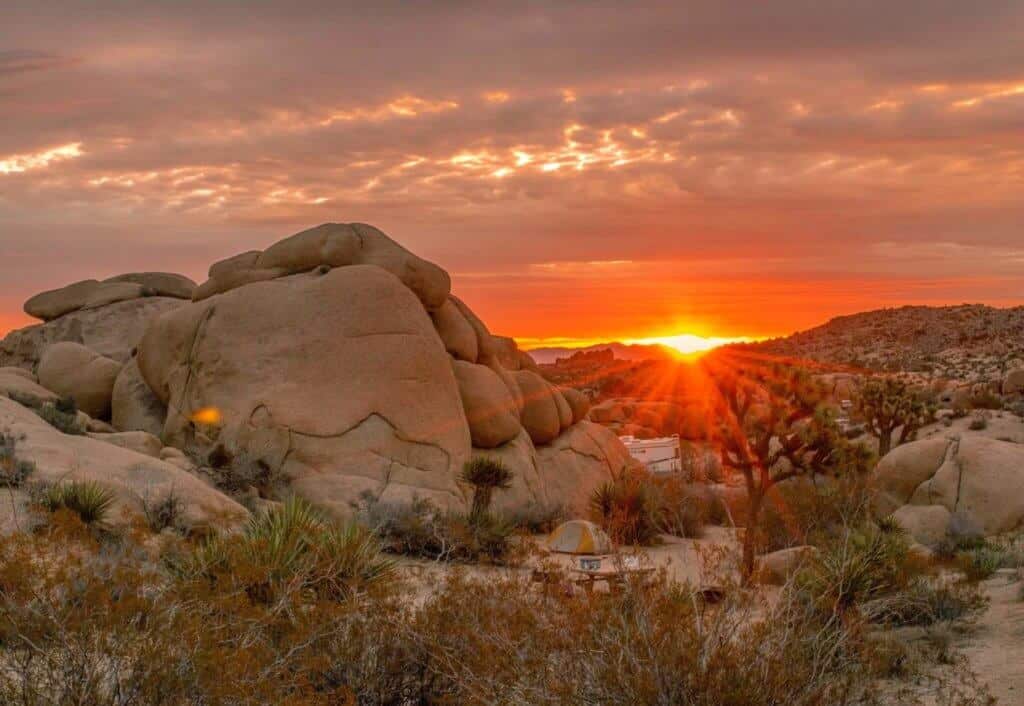
Arch Rock Loop (sunrise): This is a short, 1.2-mile loop to an arch rock formation. There is very little shade here, so sunrise is the perfect time to explore.
Jumbo Rocks Campground (sunrise): Make your best camp coffee and scramble up the boulders just before dawn. Watch the light turn the desert pink and gold. I particularly love the area around the campground amphitheater for photography.
Keys View (sunset): On a clear day, you can see for hundreds of miles from this elevated viewpoint. A motel owner once insisted I watch the sunset from here, and she was spot on. No hiking required. Wheelchair-accessible.
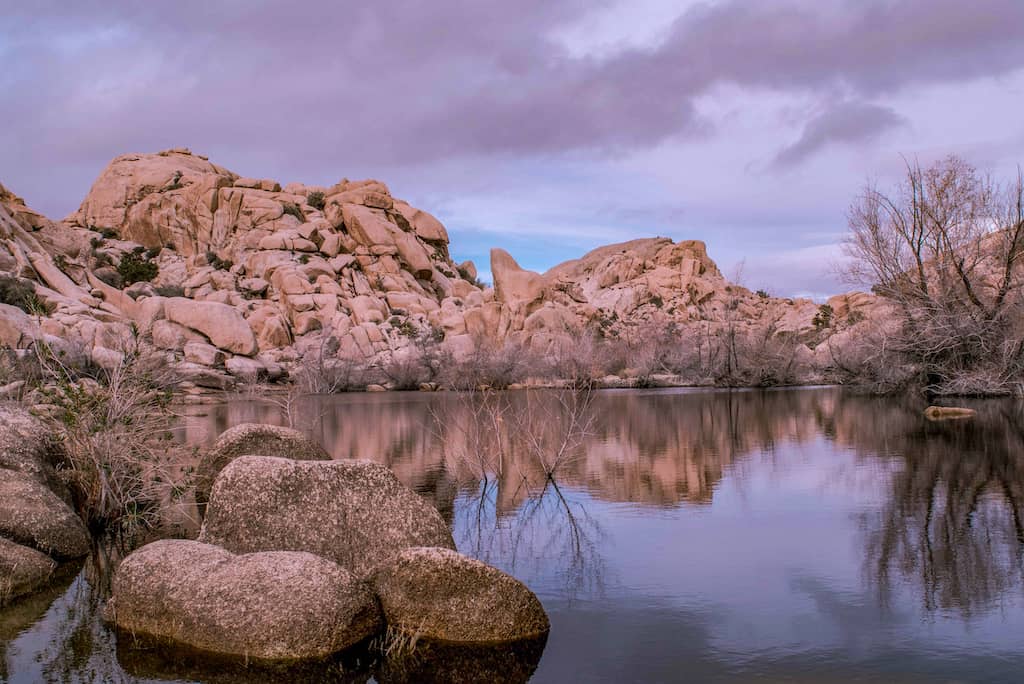
Barker Dam (sunset): One of the few places in the park with water, Barker Dam is beautiful as the sun sinks behind the boulders, casting reflections across the lake. Catch the sunset here, and you’ll have just enough time to get back to your car before dark (It’s a 1.3-mile loop).
Rock Climbing in Joshua Tree
While I’ve never actually been rock climbing myself, Joshua Tree is one of the premier rock climbing destinations in the world, with hundreds of routes for all skill levels.
Even if you’ve never climbed before, a guided lesson is an incredible way to experience the park from a completely different perspective.
This guided rock-climbing lesson for families lasts four hours and is led by certified guides and wilderness first responders. All equipment is provided, and it’s suitable for all ages and experience levels. The focus is on 1-2 rock formations, so you’ll spend as much time climbing as possible.
Hidden Valley Campground is the hub of climbing activity in the park and a great place to watch skilled climbers, even if you’re not climbing yourself.
Stargazing in Joshua Tree National Park
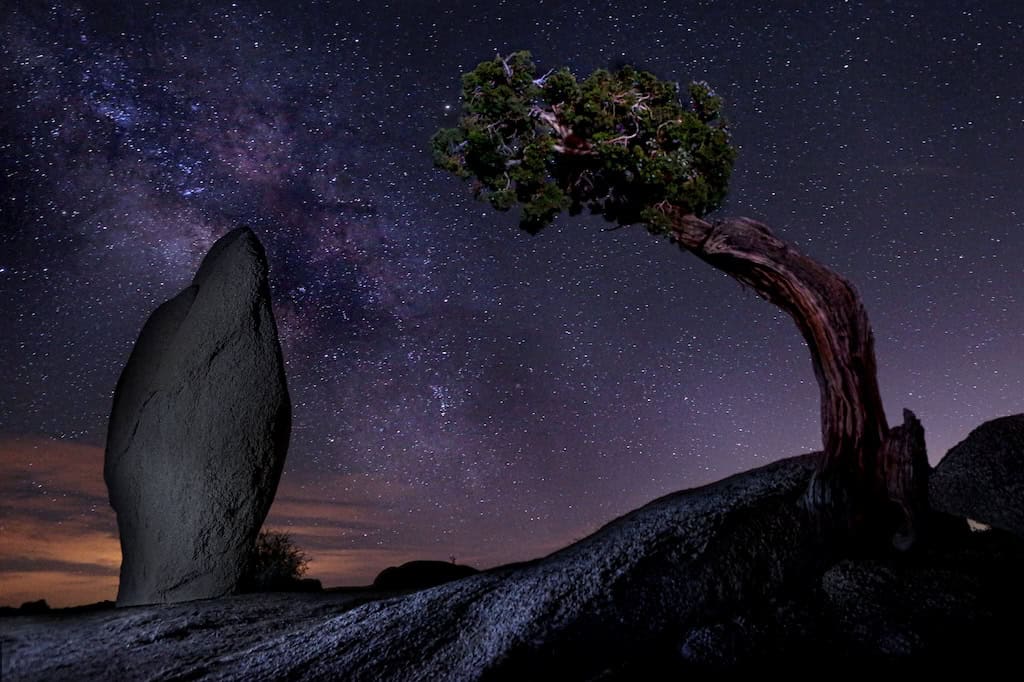
Most of us have forgotten what a truly dark sky looks like. For millennia, our ancestors stood in awe of the heavens, navigating by stars, telling stories through constellations, and marking seasons by the movement of planets. Today, most of us live under a permanent orange glow of artificial light that washes out the night sky entirely.
Joshua Tree National Park is one of the rare places in Southern California where the night sky shines with unobstructed, unpolluted splendor. With some of the darkest nights in the region, Joshua Tree is a designated International Dark Sky Park, and for many visitors, it’s the first time they’ve ever seen the Milky Way with their own eyes.
The eastern section of the park has the darkest skies. The western half is more affected by light pollution from Palm Springs and the Morongo Basin communities, so if serious stargazing is on your agenda, plan accordingly.
Best spots for stargazing:
- Cottonwood Campground has the darkest skies of any campground in the park.
- Pinto Basin Road between Cholla Cactus Garden and Cottonwood has the least traffic and darkest roadside conditions.
- Designated stargazing parking areas are located at Quail Springs, Hidden Valley, Cap Rock, and Ryan Mountain.
What you’ll see by season:
- Winter: Orion dominates the southern sky, with Sirius (the brightest star visible from Earth) just below and to the left. December sunsets as early as 4:30 pm mean plenty of dark sky time before bed.
- Spring: Arcturus rises in the eastern sky at dusk; find it by following the arc of the Big Dipper’s handle.
- Summer: The Milky Way is at its best on a moonless summer night, running through the Summer Triangle overhead. The Perseid Meteor Shower in mid-August is a reliable annual highlight.
- Fall: The Great Square of Pegasus rises in the northeast at dusk, and on moonless nights, the Andromeda Galaxy is visible to the naked eye.
The annual Night Sky Festival takes place each fall (typically late October) at Sky’s the Limit Nature Center and Observatory, just outside the north entrance in Twentynine Palms. It’s a ticketed event with limited capacity; tickets go on sale in early summer and sell out. Worth planning your visit around if you can.
Tips for a great stargazing night in Joshua Tree:
- Use red light only. White flashlights, headlamps, and phone screens destroy your night vision; it takes 20–30 minutes for your eyes to fully adjust to darkness. Cover a regular flashlight with red cellophane or tape if you don’t have a dedicated red-light headlamp. Here’s the headlamp we swear by.
- Check the moon phase before you go. A full moon is beautiful, but it significantly reduces how many stars you’ll see. A new moon gives you the darkest sky.
- Layer up. Desert temperatures drop fast after sunset; bring more layers than you think you need.
- Watch your step. Cacti, uneven terrain, and nocturnal animals are all harder to spot in the dark. Use your red light to check the ground around you.
- Bring water. There is no running water in most areas of the park.
Scenic Drive: Geology Tour Road
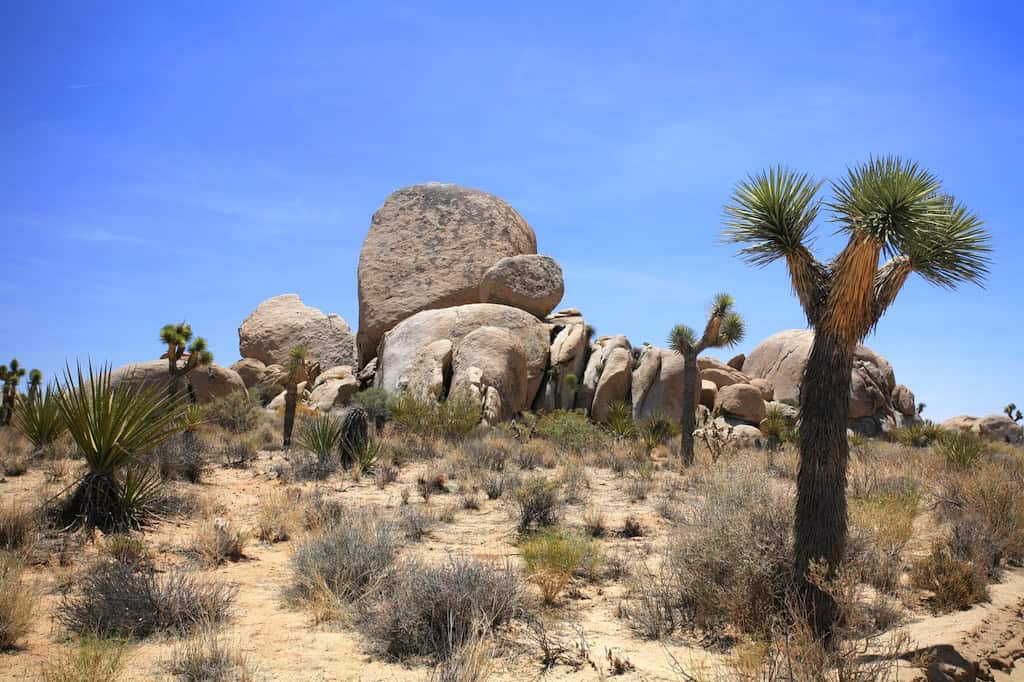
If you have a few hours and a sense of adventure, the Geology Tour Road is one of the most rewarding and underrated experiences in Joshua Tree National Park.
This 18-mile self-guided motor tour winds through a stunning transition zone between the Mojave and Colorado Deserts, passing through ancient volcanic landscapes, abandoned gold mines, dramatic rock formations, and dense forests of Joshua trees.
The road begins just off Park Boulevard between Jumbo Rocks and Sheep Pass. Look for the sign (it sneaks up on you) and turn in. It’s paved for about 100 feet before turning to dirt. Stop at the small parking area at the start to grab a free interpretive brochure from the metal stand on the southern corner.
There are 16 numbered markers along the route, each explaining a specific piece of the geology that has shaped the park over 1.7 billion years. The markers can be easy to miss, so keep your eyes peeled.
Any passenger vehicle can handle the first five miles or so, up to a point called Squaw Tank (marker #9). Beyond that, the road enters Pleasant Valley and becomes significantly rougher, with patches of deep, loose sand and narrow stretches that require high clearance. Four-wheel drive is recommended for the full loop. The road is not suitable for campers, trailers, or motor homes, and should never be driven during or after rain.
The geological highlights are genuinely fascinating, including Malapai Hill, a 400-foot-high inactive volcano, and a feature called Nature’s Gutter.
The first stretch of road passes through a beautiful Joshua tree forest, which provides a great introduction to the drive. As you get deeper into the route, the landscape shifts dramatically into open desert valleys that feel completely unlike the boulder-strewn western sections of the park.
My Favorite Hikes in Joshua Tree National Park
Joshua Tree has some of the most rewarding hiking in the national park system, from short, boulder-scrambling loops suitable for young children to challenging backcountry routes that offer experienced hikers sweeping desert views.
A note about GPS trail navigation: I use AllTrails Plus to find nearby hikes and navigate without cell service. While the free version of AllTrails is great, the Plus and Peak versions allow you to download hikes so you can navigate in areas with spotty service, a must in Joshua Tree National Park. Use our affiliate link for 30% off your subscription.
Here’s an overview of my favorites:
Easy Hikes (Under 3 Miles, Minimal Elevation Gain)
These trails are perfect for families, first-timers, and anyone who wants to experience the park without a strenuous commitment. All are located in the Mojave Desert section of the park.
Skull Rock Nature Trail (1.7-mile loop): A super easy and interesting hike that begins and ends at Jumbo Rocks Campground. Hike counter-clockwise to hit Skull Rock right away, then cross the road and meander through a large wash among beautifully sculpted boulders. Interpretive signs dot the landscape, and kids will love scrambling on the rocks. This is the hike I recommend first for anyone arriving at the park for the first time.
Barker Dam Loop (1.5-mile loop): One of my absolute favorites. This trail travels along the southern edge of the Wonderland of Rocks, weaves through narrow rock corridors, passes a seasonal lake, and leads into a beautiful valley surrounded by boulders. Because this is one of the few places in the park with water, you have a good chance of spotting wildlife; bighorn sheep are common, along with ravens and songbirds. A short spur trail leads to some petroglyphs on the rocks.
Hidden Valley Nature Trail (1-mile loop): An enclosed valley lined with enormous boulders, suitable for even the smallest hikers. Hidden Valley is ground zero for the rock climbers who flood the park in cooler months; it’s a fascinating place to watch skilled climbers at work. Be sure to venture into the verdant canyon just off the trail, where cattle rustlers once hid their livestock.
Live Oak Tank Loop (1-mile loop): A lovely short loop full of cool rock spires and formations with lots of nooks for exploring. Named for the giant, rare live oak tree nearby. Pack a picnic and spend some time here at a leisurely pace.
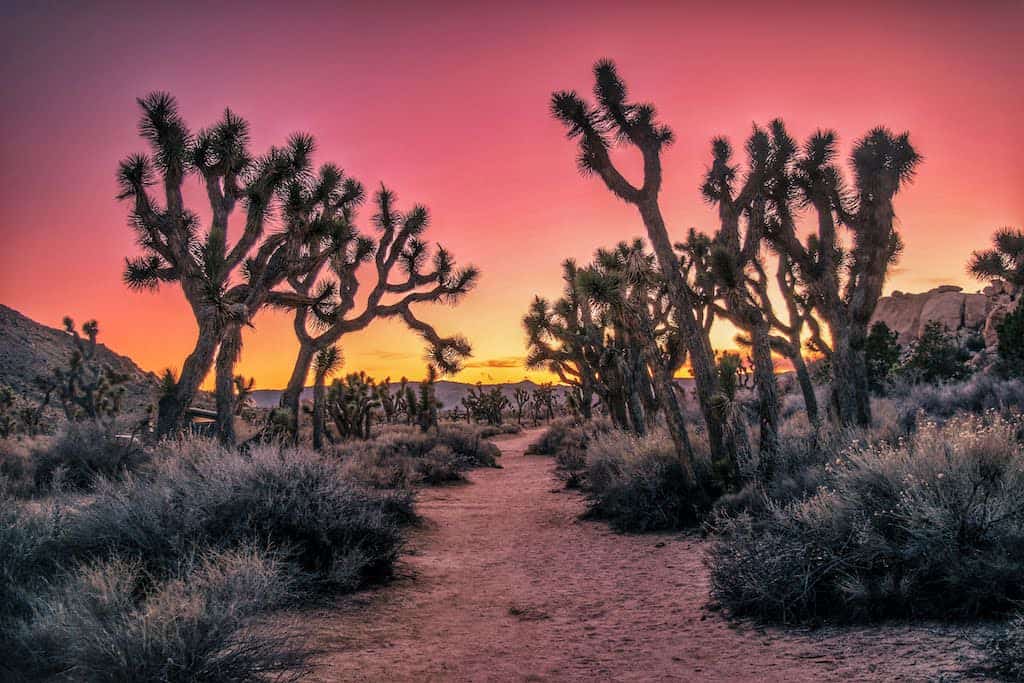
Wall Street Mill and Wonderland Wash (2.4 miles round-trip): My favorite trail in Joshua Tree — more of a walk than a hike, but endlessly fascinating. The trail passes through the defunct Wonderland Ranch and is lined with gold rush relics: old cars, crumbling buildings, and the fabulously preserved Wall Street Mill, once the fastest and most modern gold stamp mill in the area. Photographers will find something around every bend.
Moderate to Challenging Hikes
For experienced hikers or those looking to push a little further, these trails offer more elevation and solitude:
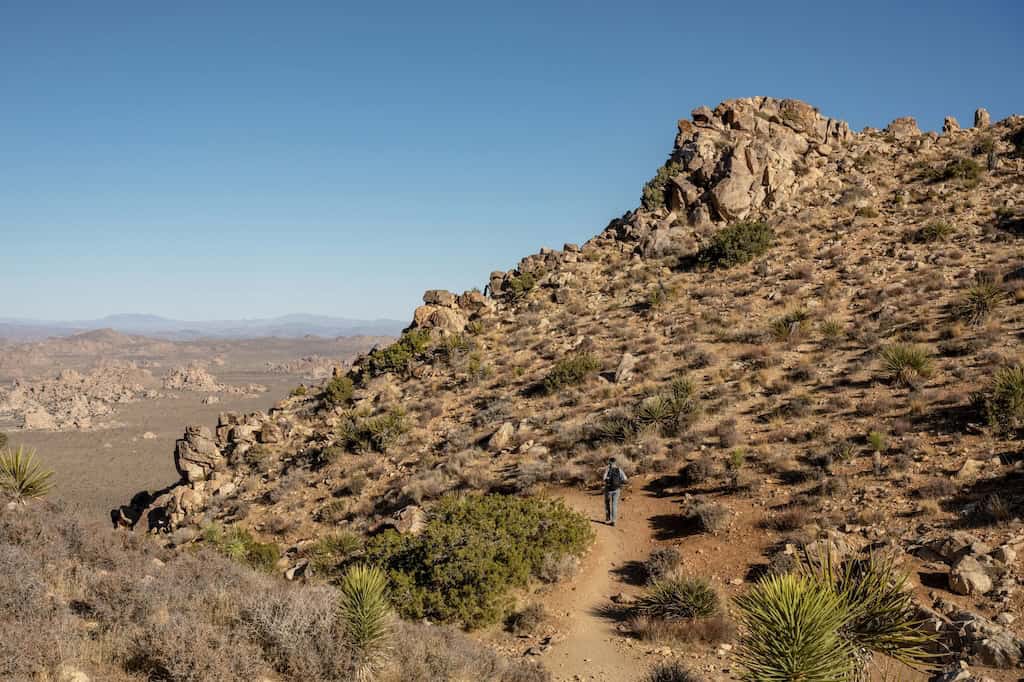
Lost Horse Mine Loop (6.4-mile loop): I recommend this one for experienced hikers with older kids. It’s longer and more demanding than the trails above, but the reward is significant: sweeping panoramic views of the park and the remains of one of the region’s most successful gold mines. Allow 3–4 hours and bring extra water.
Ryan Mountain Trail (2.9 miles, round trip): With significant elevation gains over just 1.5 miles and very little shade, I recommend tackling this one early in the morning. It’s also a great hike for sunset, with panoramic views all around. It’s a popular hike, so be prepared to share the trail with other outdoor lovers.
49 Palms Oasis Trail (3.2 miles, round-trip): The trailhead for this one is located just inside the park, near the town of Twentynine Palms. The trail is easy to follow with very little shade (start early and bring lots of water).
3 Days in Joshua Tree National Park: A Region-by-Region Itinerary
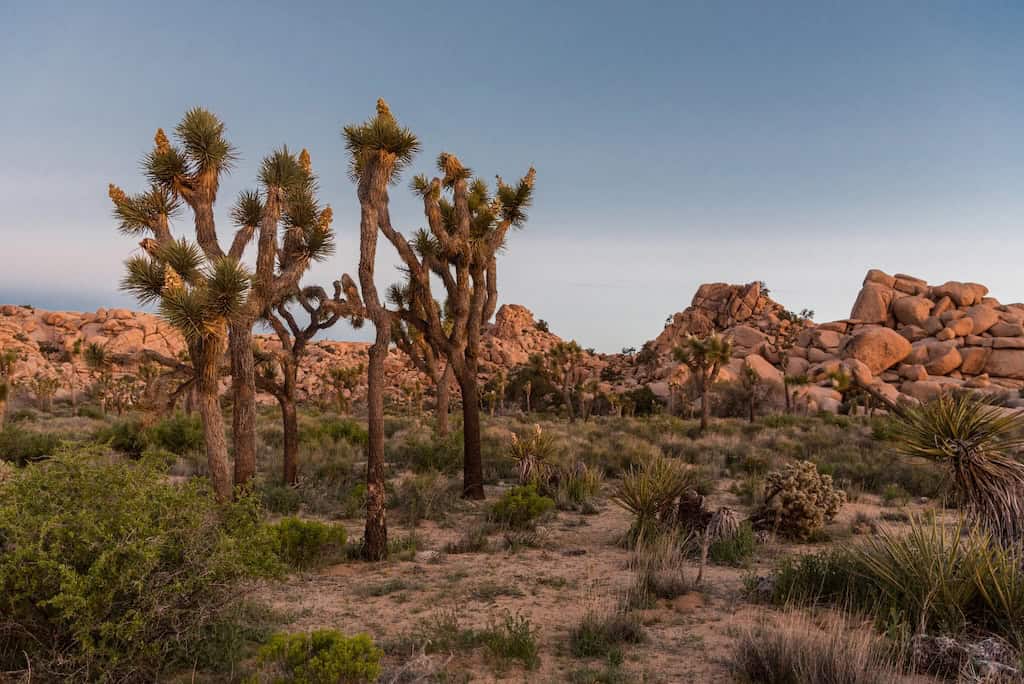
Joshua Tree is massive, so planning is essential to avoid spending all your time in the car. After many visits, I’ve landed on a region-by-region approach that makes the most of each day. Here’s the itinerary I’d give a friend visiting for the first time:
Day 1: West Entrance: Hidden Valley, Barker Dam, Keys Ranch, Keys View
Enter through the west entrance in the town of Joshua Tree and spend your first full day in the park’s most storied section. Here’s how I’d spend day one in Joshua Tree…
Morning: Barker Dam Loop (1.5 miles): Start early when the light is best, and wildlife is most active. Bighorn sheep are frequently spotted here in the morning. The narrow rock corridors and seasonal lake make this one of the most visually varied hikes in the park.
Mid-morning: Hidden Valley Nature Trail (1 mile): A short drive away. Walk the loop, peek into the cattle rustlers’ canyon, and watch the rock climbers work the formations.
Late morning: Keys Ranch Tour: Reserve well in advance. This is the highlight of the west entrance area and one of the best experiences in the entire park.
Afternoon: Head into town for food at Crossroads Cafe, the best breakfast in the Mojave Desert, and they serve it all day.
Late afternoon: Set up camp or check into your lodging.
Sunset: Keys View: Drive up to Keys View for the best sunset viewpoint in the park. On a clear day, the views stretch for hundreds of miles. No hiking required.
Day 2: The Heart of the Park: Jumbo Rocks, Skull Rock, Wall Street Mill
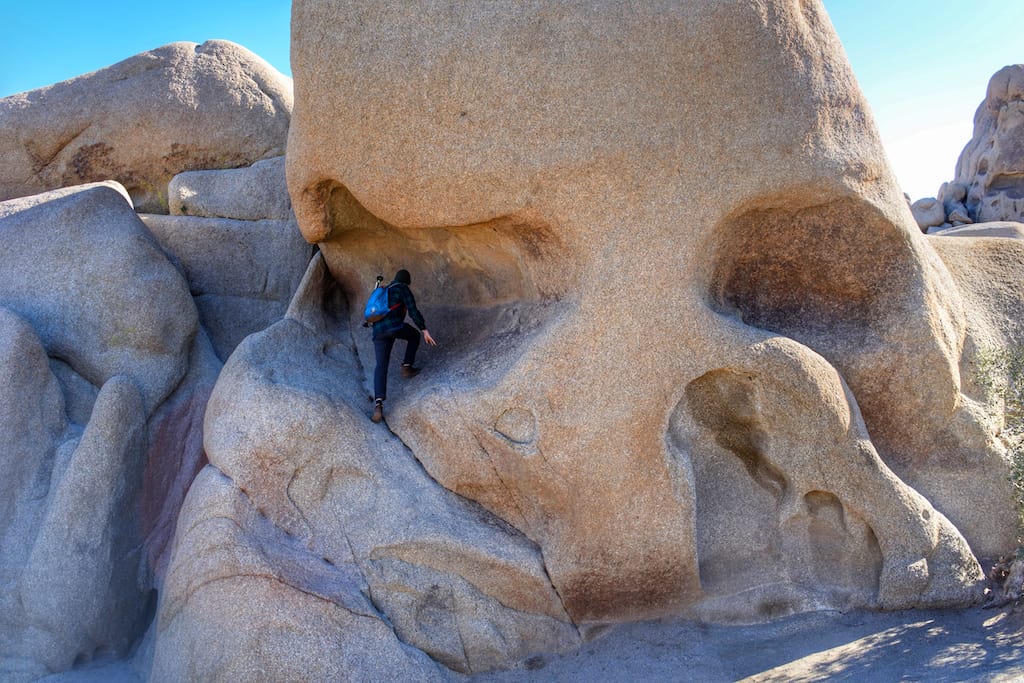
Today is centered on the Mojave Desert section around Jumbo Rocks, the most photogenic part of the park, and where I always choose to camp.
Sunrise: Jumbo Rocks: Scramble up the boulders before dawn with your coffee and watch the desert wake up. If you’re camping at Jumbo Rocks, this simply requires getting out of your sleeping bag. It’s like ripping off a Band-Aid.
Morning: Skull Rock Nature Trail (1.7 miles): Start at the Jumbo Rocks Campground trailhead and hike counter-clockwise. Visit Skull Rock, cross the road, and meander through the wash.
Mid-morning: Wall Street Mill Trail (2.4-mile loop): My favorite trail in the park. Gold rush history, old cars, crumbling buildings, and some of the most magnificent Joshua trees anywhere. Allow 2–2.5 hours.
Afternoon: Rest, boulder scrambling, and photography: The central section of the park rewards slow exploration. Wander the campground roads, find a boulder to climb, and let the afternoon unfold. You could also drive south down Pinto Basin Road to explore the Cholla Cactus Garden and Ocotillo Patch.
Evening: Stargazing: Joshua Tree is an International Dark Sky Park, and Jumbo Rocks is one of the best places in the park to experience the night sky. After dinner, walk the campground road and let your eyes adjust. The sky is extraordinary.
Day 3: The North Entrance:49 Palms Oasis, Twentynine Palms
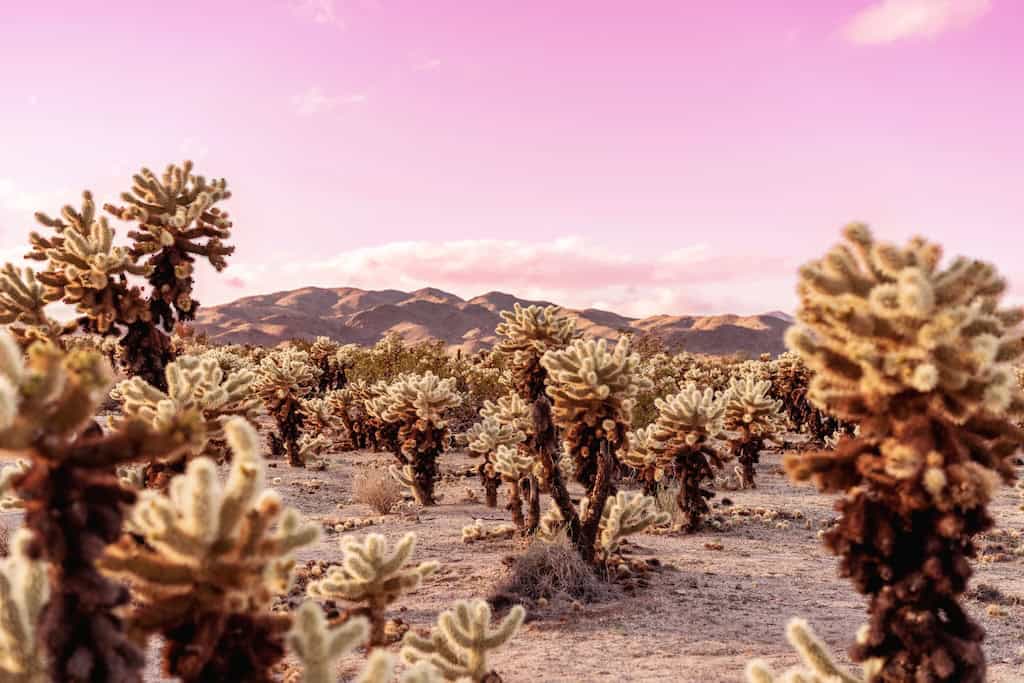
Spend your final day exploring the north and eastern sections of the park, a different landscape from the boulder-strewn west, with wide desert plains, cholla cactus forests, and a hidden palm oasis.
Morning: 49 Palms Oasis Trail: An unexpected reward at the end of a desert trail; a lush palm oasis tucked into the rocky hillside. Arrive early for the best light and wildlife viewing.
Mid-morning: Geology Tour Road: If you have a high-clearance vehicle, the 18-mile Geology Tour Road is a fascinating self-guided drive through volcanic landscapes and dry lake beds that feel completely unlike the rest of the park.
Afternoon: Twentynine Palms: Head into town for a meal and explore the extraordinary mural art that covers buildings throughout the community. More than 29 murals and 40 art installations make this one of the most unique small towns in California.
Evening: Choose another hike from the list above and explore during sunset.
Where to Stay Near Joshua Tree National Park
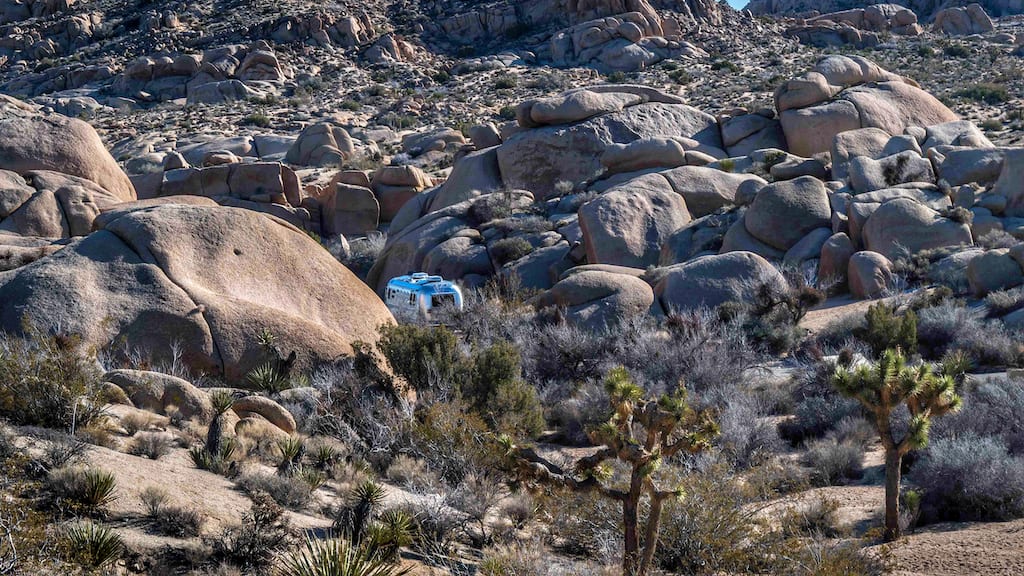
There is no lodging inside Joshua Tree National Park, but the surrounding towns offer everything from primitive camping to luxury glamping to motels and vacation rentals.
Camping in Joshua Tree National Park
I highly recommend camping in Joshua Tree; sunrises and sunsets are magical in the park, and nighttime stargazing from your campsite is an experience that’s hard to replicate anywhere else.
My top recommendation is Jumbo Rocks Campground, which is centrally located, surrounded by incredible boulder formations, and the starting point for the Skull Rock Nature Trail. I love sites #14, 15, and 16, but most sites are equally wonderful.
Here is a comparison of all nine campgrounds:
| Campground | Sites | Reservations | Water | Toilets | Cell | Best For |
|---|---|---|---|---|---|---|
| Jumbo Rocks ⭐ | 124 | Required | No | Vault | No | Best overall; boulder scrambling; Skull Rock trailhead |
| Black Rock | 99 | Required | Yes | Flush | Yes | Families needing water, flush toilets & cell service |
| Cottonwood | 62 | Required | Yes | Flush | No | Winter camping; warmest campground; darkest skies |
| Indian Cove | 101 | Required | No | Vault | Spotty | Rock climbers; dramatic boulder scenery |
| Ryan | 31 | Required | No | Vault | No | Hikers; California Riding and Hiking Trail access |
| Belle | 18 | First Come | No | Vault | No | Remote and quiet; tent campers and small RVs |
| Hidden Valley | 44 | First Come | No | Vault | No | Rock climbers; busy and social atmosphere |
| White Tank | 15 | First Come | No | Vault | No | Remote northern section; small RVs only (under 24 ft) |
All campgrounds accommodate tents and RVs up to 35 feet unless noted. No hookups at any campground. Reserve at Recreation.gov.
Insider tip: No firewood is available in the park. Buy bundles outside and bring them in. No water is available at most campgrounds. Fill up jugs at the visitor center on arrival. The only campground with reliable cell service is Black Rock Campground near Yucca Valley.
Glamping Near Joshua Tree National Park
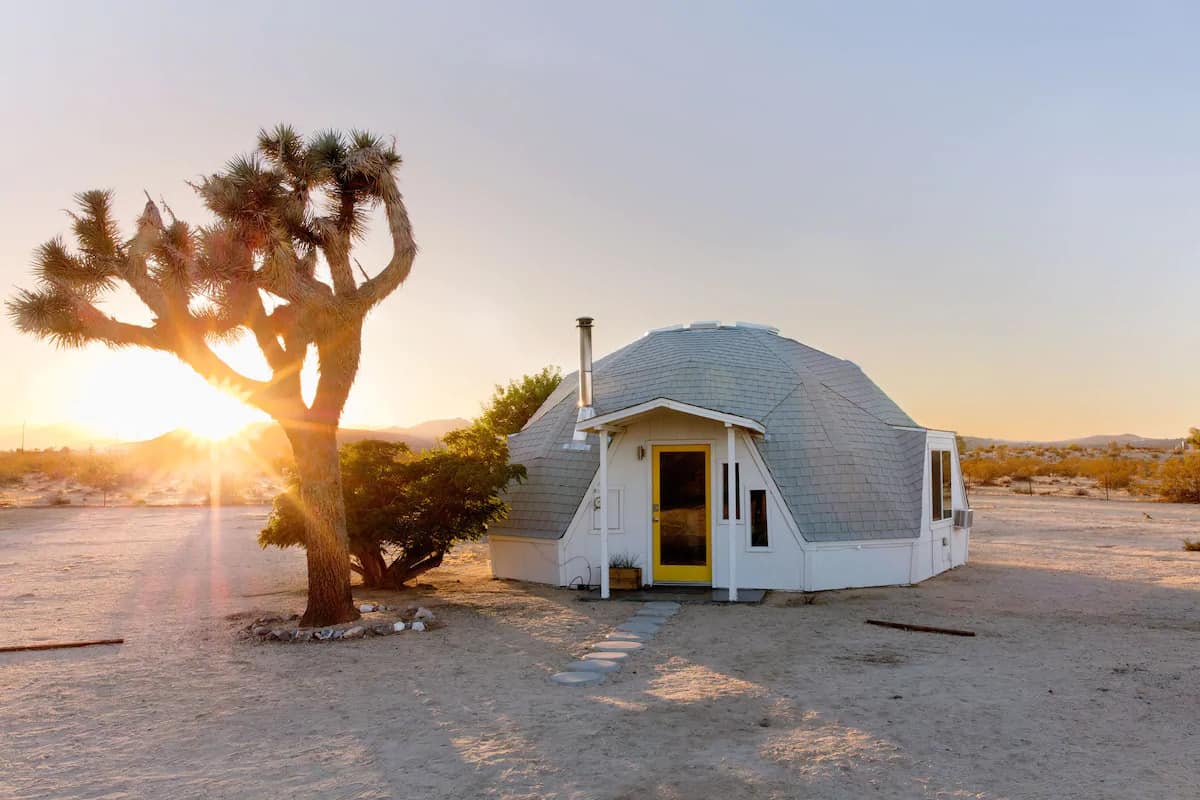
The towns surrounding Joshua Tree have a remarkable concentration of unique glamping properties, including handcrafted Mongolian yurts, vintage Airstreams, geodesic domes, luxury shipping container suites, and private cabins with hot tubs.
Most are just minutes from one of the park’s three entrances and offer the kind of stargazing you simply can’t get from a hotel room. I love camping in Joshua Tree, but if you need some extra creature comforts…
See the full glamping guide: 11 Epic Spots to Glamp Near Joshua Tree National Park
Visiting Joshua Tree National Park with Kids
Joshua Tree is far more family-friendly than its rugged reputation suggests. I’ve explored it with kids of all ages, and the boulder scrambling alone keeps children entertained for hours. The easy hikes are perfect for youngsters, and the Keys Ranch tour is a hit with history-loving kids 10 and up.
And camping under the stars at Jumbo Rocks is the kind of trip kids talk about for years.
For complete family trip planning, including toddler tips, the best kid-friendly hikes by age, and the full campground guide, see our dedicated Family Adventure Guide to Joshua Tree National Park.
Practical Tips for Visiting Joshua Tree National Park
Entrance Fees and Park Passes
Vehicle pass: $30 per carload, valid for 7 consecutive days
America the Beautiful Annual Pass: $80 covers every national park for a full year, and pays for itself after 2–3 visits.
Cell Service and Navigation
Cell service is unreliable throughout most of Joshua Tree. Download maps before you arrive. Black Rock Campground is the only campground with reliable service.
Water
Water is not available at most campgrounds. Fill jugs at the visitor center when you arrive. One gallon per adult per day is the recommended minimum; bring more in warm weather. Cottonwood Campground and Black Rock Campground both have potable water on-site.
Joshua Tree National Park FAQs
When is the best time to visit Joshua Tree National Park?
October to April is the sweet spot, with spring and fall as the standout seasons.
Spring (February–April): Wildflowers bloom, temperatures are ideal (60–80°F), and the park is buzzing with energy. Most popular season — book campsites months in advance.
Fall (October–November): My personal favorite. Smaller crowds, mild temperatures, and extraordinary light for photography.
Winter (December–February): Underrated. Minimal crowds, crisp, clear days, stunning winter light. Nights dip below freezing — camp at Cottonwood, which runs about 10 degrees warmer than the northern campgrounds.
Summer (May–September): Temperatures regularly exceed 100°F. Midday hiking is genuinely dangerous. If you must visit in summer, hike only in the early morning and choose accommodation with reliable AC.
How do I get to Joshua Tree National Park?
Las Vegas (LAS): About 3 hours to the north entrance. Easier drive than from LA, less traffic, and often significantly cheaper fares from the East Coast. A straight shot south through empty desert.
Los Angeles (LAX): About 3.5 hours to the west entrance. Expect Friday afternoon traffic.
Palm Springs: Only 45 minutes to the west entrance. A great option if you’re combining a resort visit with a national park trip.
Which entrance should I use?
North Entrance (Twentynine Palms): Best for Skull Rock, Jumbo Rocks, 49 Palms Oasis Trail, Cholla Cactus Garden, and Geology Tour Road. Most amenities nearby.
West Entrance (Town of Joshua Tree): Best for Hidden Valley, Keys Ranch, Barker Dam, and Keys View. Access to the park’s premier rock climbing areas.
South Entrance (Cottonwood): Remote, no amenities. Best for winter camping at Cottonwood Campground, which is the warmest in the park.
What is Joshua Tree National Park known for?
Joshua Tree is known for its namesake trees, the dramatic, spiky Joshua trees that only grow in the Mojave Desert, its massive climbable granite boulder formations, extraordinary stargazing as a designated International Dark Sky Park, world-class rock climbing, and a surprisingly rich wild-west history that includes cattle rustlers, gold miners, and the legendary Keys family.
Can you see Joshua Tree National Park in one day?
Yes, one day is enough to see the highlights if you plan carefully. I’d prioritize Barker Dam or Skull Rock for a morning hike, Keys View for midday views across the desert, and Wall Street Mill for the afternoon. Catch the sunset from Keys View on your way out. Two to three days, however, lets you settle in and experience the park the way it deserves.
What is the closest city to Joshua Tree National Park?
Palm Springs is the closest major city, about 45 minutes to the west entrance. Twentynine Palms is the closest town to the north entrance and has the most amenities. The town of Joshua Tree is a small, characterful community just west of Twentynine Palms with easy west entrance access and a laid-back desert-hippie vibe.
Follow us on social media for more national park inspiration!