Winter Road Trip Tips From a Vermonter Who Learned the Hard Way
Note: Advertising is how we keep this site free for you to enjoy, and we earn a commission from affiliate links that may be included in this post. Thank you for supporting Back Road Ramblers!
I’m a born and raised Vermonter, and where I live, winter hangs around for more than five months. I’ve logged thousands of miles on snowy highways and back roads, spent time in a ditch or two, and once got rescued by AAA because our dog locked us out of the car.
These are the winter road trip tips I learned from driving for 30+ years on the highways and back roads of New England.
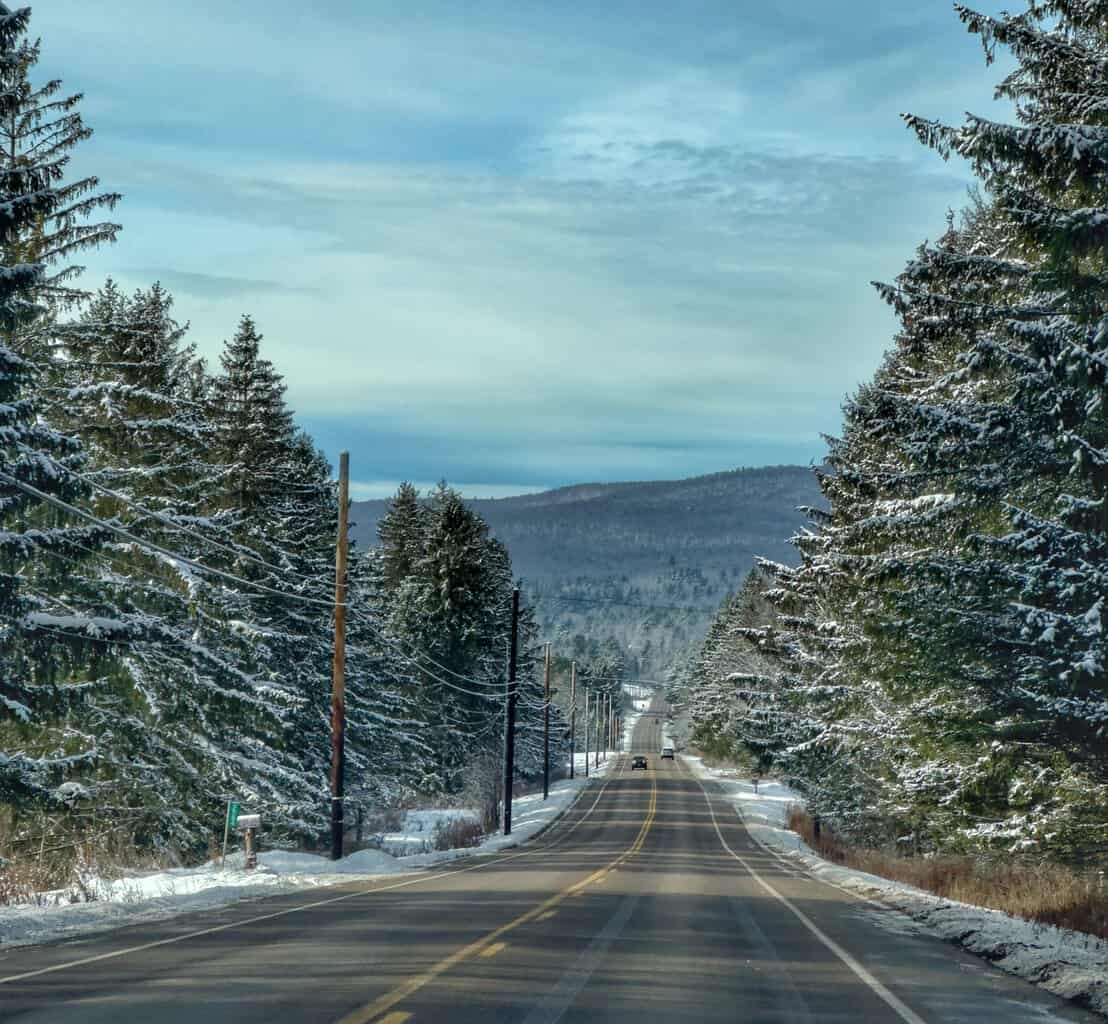
The short version: get your car checked before any long road trip, drive on winter (preferred) or all-weather tires, keep the tank at least half full, pack a winter emergency kit, leave 8 to 10 seconds between you and the car ahead on ice, and if you get stranded, stay with your car and keep the exhaust pipe clear.
You won’t be alone out there. AAA projected a record 122.4 million Americans would travel at least 50 miles from home over the 2025 year-end holidays, and 89% of them went by car.
Whether you’re headed to Grandma’s for Christmas or you’ve splurged on that family ski trip, a winter road trip can be a fun way to adventure on America’s network of highways and back roads.
While we love road tripping in every season, we also have to acknowledge that winter road trips require a bit more planning than their summer counterparts.
For one thing, the allure of the open road is often tempered by fickle driving conditions and harsh winter weather, and outdoor adventures like roadside picnics are a bit more challenging to pull off.
The sun sets earlier and rises later, which means there’s a lot of driving in the dark, and a minor road emergency can turn into a catastrophe if you’re not prepared.
Winter Road Trip Tips at a Glance
- Before you leave Mechanic check (battery, tires, wipers, hoses), fluids topped up, tire pressure checked
- Tires Winter tires, no question. Add all-wheel drive if you can. All-weather tires with the mountain snowflake symbol are the fallback.
- Gas Never below half a tank. Your engine is your heater if you get stuck.
- On ice 8 to 10 seconds of following distance, downshift on hills, no cruise control
- If stranded Stay with the car, clear the exhaust pipe, run the engine about 10 minutes an hour
- Roadside help AAA Classic tows 5 miles. I switched to Plus (100 miles) after my last tow.
- Daylight December sunsets in Vermont come around 4:15 pm. Plan to drive in daylight.
- With dogs Ours stay put until they’re leashed and released. Paw wax for road salt, and my phone and keys go with me every time I step out.
Last checked by Tara: November 2026
My take
Winter tires or all-wheel drive? After last winter, I say both.
I had great winter tires on my Pontiac Vibe, and they still didn’t stand a chance climbing an icy hill during a storm last winter. Winter tires help you stop and steer. All-wheel drive helps you get going. I wouldn’t drive around Vermont without snow tires, and now I’m shopping for an AWD vehicle too.
Speed, especially when you’re traveling down hill, is not your friend. I learned that the hard way. I was driving home from work at Smugglers’ Notch Ski Resort, heading down the mountain in heavy snow. I tried to be gentle on the brakes, but I was going too fast, and one tap sent the car spinning into the ditch, where I waited for a tow truck. Now I downshift on every snowy hill, and I’d rather drive at a snail’s pace than get towed out of a ditch.
Yes, there are Benefits to Winter Road Trips…
Aside from the fact that road tripping in any season is just more fun than staying home, here are some of the other benefits we’ve found to winter travel…
Roads and attractions are far less crowded in the winter, and hotels run their best sales after the holidays, as long as you’re not headed to a popular ski town.

Read Next: Winter Road Trip Essentials: Packing List for Cold Weather
Winter Road Trip Tips: Safety and Preparation
No matter what time of year you’re driving, the most important thing is to drive safely and defensively.
In winter, this means knowing how to drive in snowy and icy conditions, ensuring your car is equipped for winter travel, and packing appropriately for possible mishaps or emergencies.
The following tips will help you stay safe during your winter road trip.
Invest in a roadside assistance program. We use AAA, and they’ve never let us down. We have used them to tow us out of ditches, fill our empty gas tank, and rescue us when our dog locked us out of the car in a fit of excitement.
That’s why my phone and keys come with me every time I step out of the car, even for a moment. Our dogs are trained to stay in the car until I leash them and release them, which matters even more at a snowy rest area next to a busy highway. When the roads are salty, I rub Musher’s Secret paw wax on their pads before we go.
AAA provides 24-hour roadside assistance, hotel discounts, and identity theft monitoring. Prices depend on your regional club. The Classic level covers towing up to 5 miles, which won’t get you far on a back road in the middle of nowhwere. This year, I upgraded to AAA Plus after my last tow, and since I travel through a lot of rural areas, 100 miles of towing is very helpful (back roads for the win!).
Put on winter tires. What a huge difference snow tires make! They grip far better than all-season tires, especially if it snows a lot where you live. If you don’t want to swap tires twice a year, look for all-weather tires with the three-peak mountain snowflake symbol on the sidewall. They’re better in snow than all-seasons, though still not as good as dedicated winter tires.
Check your tire pressure before your trip, especially if the temps have dropped. Tires lose about 1 psi for every 10 degree drop in temperature, so tires you filled in October can be low by December, and the pressure can swing from day to day as you drive in and out of cold weather. Consumer Reports explains why you shouldn’t let air out for traction.
Keep your gas tank at least half full. If you’re ever stranded, your engine is your heater, and a fuller tank means fewer worries about the next gas station on a long, empty stretch of road. It also leaves less room for condensation that can freeze in the fuel line.

Have your car serviced by your local mechanic. Before your winter road trip, you should have your battery, tires, wipers, hoses, and other systems checked to ensure your car can handle a long journey. Of course, you can do this yourself if you have the skills. If not, ask your mechanic to inspect your car before heading out on a winter road trip.
Check your car’s fluids before each trip. While this isn’t specific to winter road trips, there’s a good chance you’ll need that extra washer fluid if you’re driving in slushy conditions. Check your oil, transmission fluid, and coolant levels, too, and keep extra fluids in your car just in case.
Inspect your windshield wipers. While the lifespan of your windshield wipers can vary, most experts recommend replacing them every six months. We replace ours in the spring and fall, so they are usually in good shape for the winter months. Even if you’ve recently replaced your wiper blades, inspect them before your winter road trip, just in case.
Dress Appropriately. Driving in full winter garb isn’t much fun, but no matter what you wear when you’re actually driving, be sure to have appropriate cold-weather clothing with you in case you encounter a winter storm.
And if you’ve got teenagers who think they know how to dress, remind them that they need boots, mittens, and warm coats for the journey.
They may think they’ll be warm and cozy in the car for hours on end, but they won’t be smiling if the car breaks down and they have to get out and walk in the cold.
Winter Road Trip Checklist: Car Safety Essentials
Car trouble is no fun in any season, and in winter it can turn a fun trip into a scary one. Here’s what rides in our car from November to April, and why.
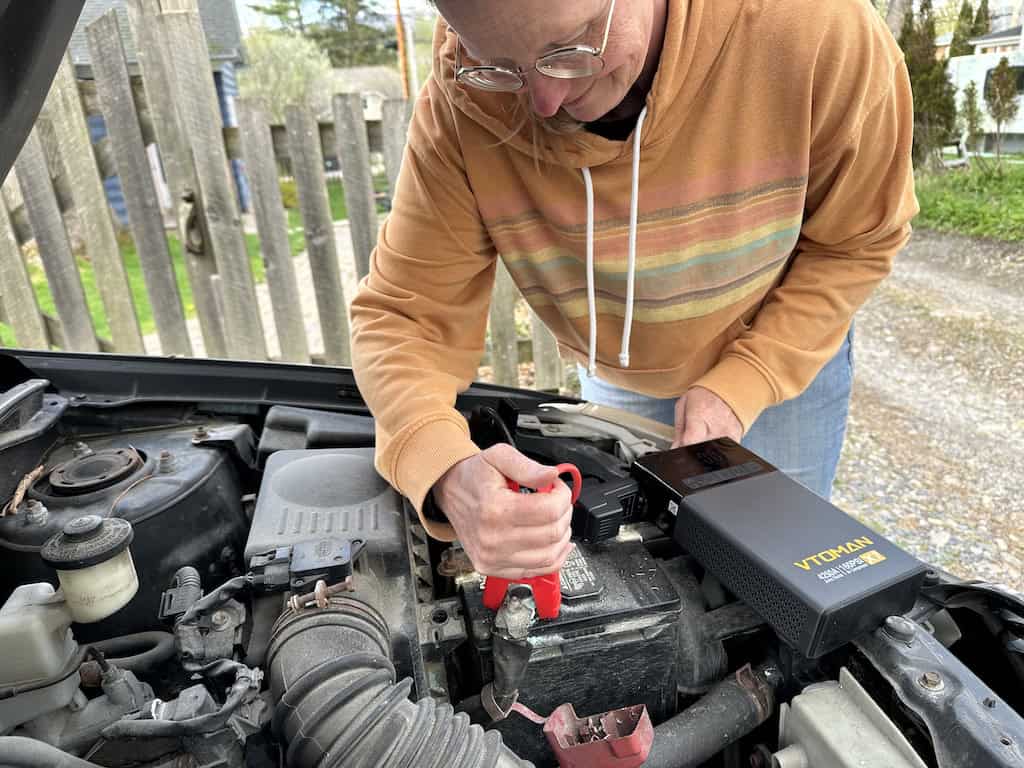
- A jump starter and air compressor Ours has saved us on numerous occasions, and it tops off low tires too. I keep our VTOMAN X7 in the car and charge it before every big trip, especially in winter. Jumper cables are the backup, but they need a second car.
- Your AAA card and emergency numbers on paper Phones die in the cold and lose signal in the mountains. A card in the glove box doesn’t.
- A fully inflated spare Check your spare when you check the other four. It loses pressure in the cold too.
- An ice scraper and snow brush Clear the whole car, roof included. In New Hampshire, it’s the law.
- A small shovel and a bag of sand or kitty litter For digging out a buried tire and giving it something to grip.
- Extra fluids Winter washer fluid rated well below zero (you’ll go through it in slush), plus motor oil and coolant.
- Emergency blankets and one real blanket Foil blankets pack small. A puffy blanket keeps you warm if you’re stuck for hours.
- Warm layers for everyone Hat, mittens, boots, and wool socks, even if you plan to drive in sneakers. Here’s my full winter road trip packing list.
- A headlamp It gets dark by 4:30 pm, and a headlamp leaves both hands free for a tire change or any other emergencies that may come up.
- A phone charger and a power bank A power bank keeps working when the engine is off. The VTOMAN X7 jumpstarter above can also charge phones.
- A paper map of your route Cell service disappears in the mountains of New Hampshire and Vermont.
- Extra food and water Trail mix, jerky, and granola bars that won’t freeze solid. These are our favorite road trip snacks.
- Warning triangles or flares Winter visibility is bad, and you want to be seen if you have to stop on the shoulder.
- Basic tools A hammer, wrenches, pliers, and screwdrivers.
- A road trip first aid kit Here’s how to build your own car first aid kit.
Short on time? Ready-to-go emergency car kits cover much of the gear above, and they make great gifts for new drivers.
Winter Road Trip Driving Tips
Driving in the winter can be challenging, and over the past few years, even southern states have experienced icy roads and snowy conditions.
Check the weather forecast before heading out so you’re aware of any extreme weather conditions. No matter where you’re headed this winter, follow these winter driving tips to stay safe on the road.

Accelerate and decelerate very slowly. Sudden braking and acceleration could cause you to skid and lose control.
Increase the following distance between you and the car in front of you. Instead of the 3- or 4-second rule, aim to keep 8 to 10 seconds of distance behind the car in front of you, and never use cruise control on icy roads.
If you can, slow down instead of stopping. This is especially important on hills where you may slide backward if you try to start and stop again.
Downshift on snowy hills. Shift into a lower gear (L, or your car’s manual mode) before you start downhill, and let the engine do the braking. One tap on the brakes while going too fast downhill is how I ended up in a ditch near Smugglers’ Notch.
What to Do If You Get Stranded in Winter
If you slide off the road or get snowed in, stay with your car. It’s your shelter, and it’s much easier for rescuers to spot than a person walking in a storm. Then work through this list:
- Call for help. Call your roadside assistance service, or 911 if you’re in danger or can’t reach anyone else.
- Clear the exhaust pipe before you run the engine. Snow packed around the tailpipe can push carbon monoxide into the car. Check it again every time you run the heat.
- Run the engine about 10 minutes an hour. That’s enough to take the chill off without burning through your gas. Crack a window on the side away from the wind.
- Make yourself visible. Tie a bright cloth to your antenna or door handle. At night, turn on the dome light while the engine is running.
- Layer up and keep moving. Put on everything warm you packed, share blankets, and wiggle your fingers and toes.
Good to know
Driving New England in Winter
- Clear your roof. New Hampshire’s Jessica’s Law fines drivers $250 to $500 for a first offense of driving with snow and ice on the car, and up to $1,000 after that. Clear it in every state, law or not. Planning a coastal trip? Here’s Portsmouth, NH in winter.
- Some mountain roads close for the season. Vermont closes Route 108 through Smugglers’ Notch, between Stowe and Cambridge, for the winter, usually by late November. Your GPS won’t always know.
- Fill up before the Kancamagus. The Kancamagus Highway stays open all winter, but there’s no gas and no services along its 34.5 miles. Fill up in Lincoln or Conway.
- Check road conditions before you go. New England 511 covers New Hampshire, Vermont, and Maine.
- The days are short. In Burlington, the earliest sunsets come around 4:12 pm in early December. Get your mountain miles done by mid-afternoon.
Renting a Car for a Road Trip in the Winter

If you’re planning a winter road trip and are worried about your car’s reliability, you may want to consider renting one. Renting a car for your winter road trip is ideal if you drive a small or older car, or a vehicle that doesn’t perform well in winter conditions.
Rental cars are usually new or just a few years old, so maintenance problems are unlikely. You’ll save wear and tear on your own car, and you can choose something a bit larger or more fun to drive.
If you know you’ll be driving in snow and ice, consider renting an SUV or truck with four-wheel drive.
In the past, we’ve chosen to fly to our winter holiday destination and drive a rental car home. Why? Because we always end up with more luggage than we anticipated!
Renting a car allows us to exchange gifts with our family without worrying about how much space they’ll take up.
Winter Road Trip Tips for Staying Sane

Winter road trips can be challenging, but we know you’re up for it. Here are some road trip tips to help keep everyone sane en route to your destination.
Our kids are grown now, but our winter road trip routine hasn’t changed: lots of breaks, road trip games, and a good audiobook.
Hot chocolate. Is it worth having to stop and pee? Absolutely. Fill your favorite thermos with hot chocolate before you head out, and suddenly your winter road trip becomes a bit more magical.
Christmas music? Maybe not. When the boys were young, I could hear the groans before the first carol started. If I were part of a different family, I’d tell you to sing along and get silly. Do it if your crew will let you.
Stay somewhere warm. We’re a camping family, but winter tent camping on a road trip is beyond us, so we splurge on a hotel with an indoor pool and a hot tub.
Audiobooks are such a lifesaver that it’s worth repeating a hundred times. We make use of our Audible subscription on just about every road trip.
Pit Stops. In the summer, we tend to stop for picnics, hikes, and other outdoor adventures. We do that a bit in the winter too, but sometimes we have to settle for the mall, our favorite pit stop at night or on bad-weather days. You can still run around a bit in the mall (with some restraint), and the rarely-visited food court (at least for us) becomes a special treat.
Have a rest-area snowball fight. Great fun if everyone has their mittens handy. This is a great way to blow off some steam, and it might be a reason to wish for snow before your trip.
Eat good food. Keep sugary snacks to a minimum unless you are prepared for a meltdown. Instead, pack trail mix, cheese and crackers, beef jerky, and carrots with hummus. Here are some of our favorite road trip snacks for kids and adults.
Winter Road Trip FAQ
What should I keep in my car for a winter road trip?
At minimum: an ice scraper, a small shovel, blankets, warm layers, a jump starter or jumper cables, a headlamp, a phone charger and power bank, food and water, and a first aid kit. Add sand or kitty litter for traction if you drive in snow country.
Do I need snow tires for a winter road trip?
If you’re driving anywhere it snows regularly, yes. Winter tires grip and stop far better on snow and ice than all-season tires. All-wheel drive helps you climb icy hills but can’t help you stop, so the best setup is both. All-weather tires with the three-peak mountain snowflake symbol are the fallback if you don’t want to swap tires twice a year.
How far behind other cars should I drive on icy roads?
AAA recommends 8 to 10 seconds of following distance on icy or slippery roads, up from the usual 3 to 4. Skip cruise control, and accelerate and brake gently.
What do I do if my car gets stuck in the snow?
Stay with your car and call for help. Clear the exhaust pipe before you run the engine, run it about 10 minutes an hour for heat, and tie a bright cloth to your antenna so rescuers can find you.
Should I keep my gas tank full in winter?
Keep it at least half full. If you get stranded, the engine is your only heat source, and in rural areas the next gas station can be a long way off.
Should I rent a car for a winter road trip?
Renting makes sense if your car is older, small, or bad in snow. Ask for an SUV or a four-wheel-drive vehicle if you’ll be in snow country, and remember that tires matter more than drivetrain on ice.
Got any winter road trip tips to add to our post? Leave a comment below to make our day. And if you found this post useful, we’d love it if you’d share it far and wide.
Connect with us on social media!