
How to Plan a Cross-Country Road Trip on a Budget (+ What It Really Costs)
Note: Advertising is how we keep this site free for you to enjoy, and we earn a commission from affiliate links that may be included in this post. Thank you for supporting Back Road Ramblers!
Is there anything more enchanting than an epic cross-country road trip?

If you’re anything like me, you’ve been poring over maps, researching campgrounds, and creating your perfect travel playlists in anticipation of this epic adventure.
And if you’ve got frugality in your blood, you’re stressing over your travel budget. Even frugal road trips that involve lots of peanut butter and jelly and rustic campgrounds can put a dent in the old bank account.
Planning a cross-country road trip on a budget is not only possible, but it’s also how we’ve traveled for years.
My wanderlust is hardcore, but my wallet isn’t! To make cross-country road-tripping possible, I’ve learned to stretch every dollar, which also stretches out the time I get to spend on backroad adventuring!
Our travel philosophy is to prioritize outdoor adventuring over other types of travel. We’d rather spend weeks in a tent than a few days in a posh resort.
Going without the luxury of four solid walls will keep the green in your wallet, but even if camping isn’t your thing, you can still plan an awesome (and cheap) cross-country road trip while still sleeping in a comfy bed at night.
Ready to plan the most awesome budget road trip ever? Here’s how to plan a cross-country road trip that won’t break your bank account.
Table of Contents
What Does a Cross-Country Road Trip Cost?
The biggest variable will make or break your budget: It depends almost entirely on where you sleep. Using our own budgeting method for a 6,500-mile, three-week trip, we spend roughly $2,400 camping the whole way, about $3,200 on a camping-and-hotel hybrid, and around $4,800 if we book a room every night. Gas and food stay about the same across all three. Lodging is the number we focus on most.
Want your own number instead of ours? Plug your car and route into the calculator below, and it will do the math for you.
Estimates based on Back Road Ramblers’ real road-trip budgeting method. Attractions and extras beyond the park pass vary by route.
Ready to build your road trip budget from scratch? Here’s how we plan a cross-country road trip that won’t break the bank.
Step 1: Make an Adventure Plan
Every awesome road trip starts with deciding where to go. For me, this is half the fun! You already know you want to embark on an adventurous road trip and don’t want to spend a lot of money. Now it’s time for dreaming!
Gather your family or your road trip partner for dinner and discuss destination ideas. Keep your cost goals in mind, but don’t let them dictate your whole journey.
Find a balance by considering high-cost destinations and deciding whether a visit is feasible. If the goal is Disney World, which is extremely expensive, you may have to make the rest of your trip super frugal.
If, on the other hand, your goal is to visit national parks, historic sites, and small towns, you’ll be able to stretch your dollar further. Try to balance big-ticket destinations with frugal side trips. If you have time constraints, keep these in mind too.
Now, plug all of those great ideas into Google Maps and see what you’re working with.
Pro tip: During the planning stages, you can dream big, but your time and budget constraints may mean you’ll have to whittle down your plan as the road trip takes shape. That’s okay!
Step 2: Make a Road-Trip Budget and Start Saving

If you want to save money for your road trip, budgeting is a necessary step!
You don’t have to budget for every single road trip expense, but it helps to have a ballpark idea of what your trip will cost so you can start saving.
Your big expenditures will fall into four main categories: transportation and gas, food, lodging, and fun. How much you need will depend a lot on your priorities.
When planning your cross-country road trip on a budget, it will be helpful to ask yourself and your family a few questions and face a few hard truths head-on.
Budgeting for Transportation and Gas Expenditures
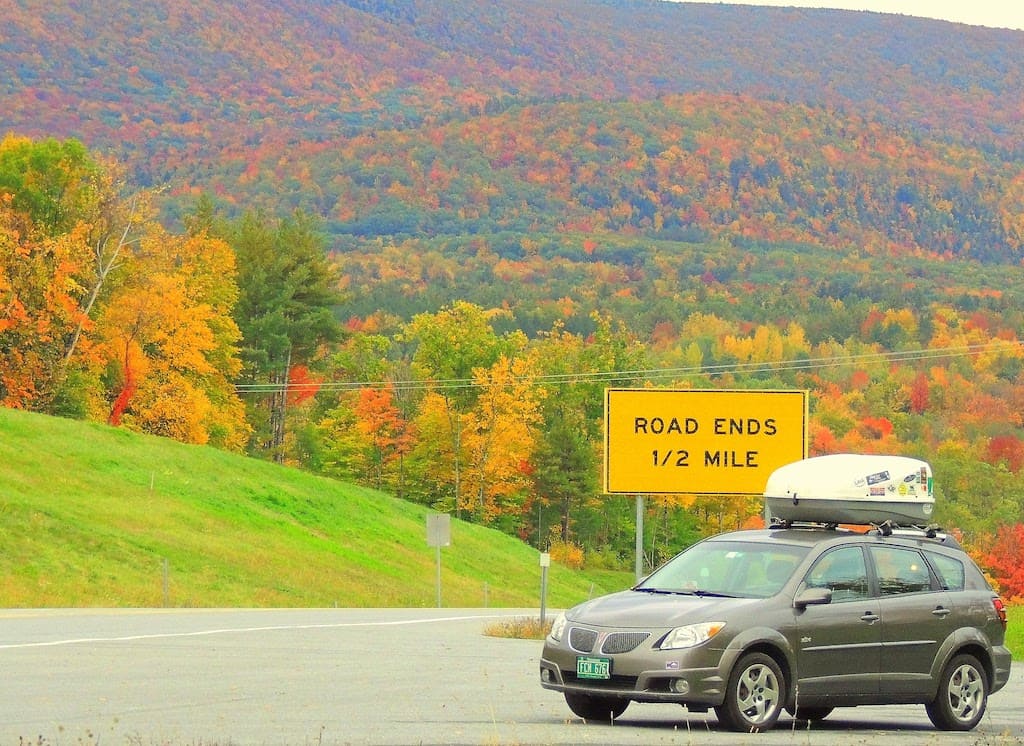
Is your car reliable enough for long-distance travel? How many miles per gallon does your car get? How far are you planning to travel on your road trip (just a rough estimate)?
Let’s start with reliability. I imagine most cross-country road trippers have a car reliable enough for a long journey, but I’d recommend having your mechanic take a good look under the hood before your trip. In almost every situation, it will be far less expensive to deal with potential issues now than when you’re on the road.
Now, for a big-budget line item: gas. You can’t change your car’s MPG, but you can change the distance you travel on your trip to save money. Remember, this is just an estimate. Don’t get bogged down in the details!
Here’s our budget breakdown for gas from our last big trip:
Our car’s MPG: 33. We have a small car that gets pretty good gas mileage. The downside is that we have to pack light! Read: How to Pack a Small Car for a Big Trip for more on that!
Average price per gallon: $4.14. This varies quite a bit depending on where you travel, so we used the current national average (2026) to estimate this cost.
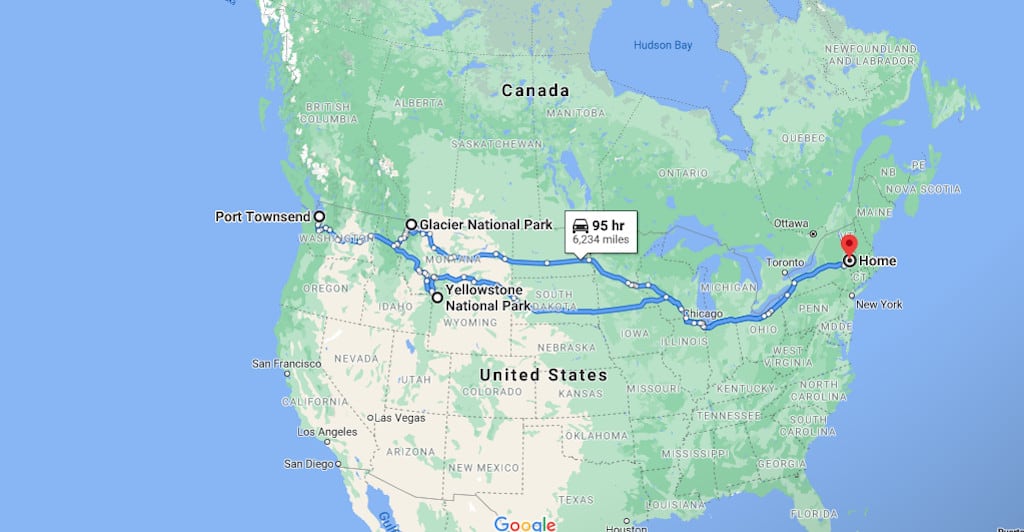
Estimated mileage: 6,500 miles. On our most recent road trip, we drove from Vermont to Port Townsend, Washington, to visit our son. We typed it into Google Maps, along with a few destinations we didn’t want to miss. Then we rounded up because we never take the quickest route anywhere!
Do the math: total miles / your car’s MPG x price per gallon. 6,500 / 33 = 197, and 197 x $4.14 = $815.58 in gas. I’ll round it up to $900 to give ourselves an extra cushion to explore.
Once you have an estimate of your gas cost, you can estimate additional transportation costs like tolls and parking fees.
Pro tip: When planning your trip on Google Maps, you can choose to avoid tolls to save a little bit of money. You can also choose to avoid highways, which will sometimes give you fun routes to try.
Budgeting for Food on the Road
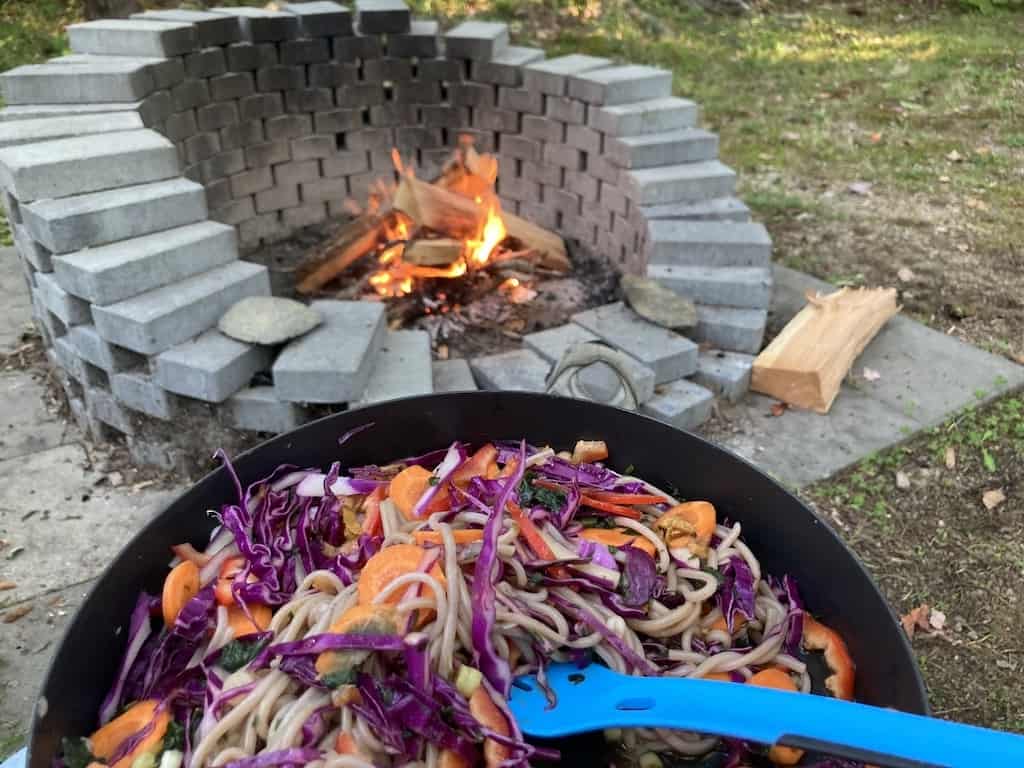
You can save a bundle of money on your road trip just by packing a cooler and a picnic basket and stocking up on food at grocery stores instead of restaurants. Save even more by cooking your breakfasts and your dinners, either at a campground or an Airbnb.
Budgeting for road trip food is not an exact science.
First, be realistic about your habits and budget more than you think you’ll need. I imagine you’ll want to eat out occasionally. Decide whether you can afford to splurge on a restaurant meal every few days or every week. You may find it helpful to create two separate budget categories: restaurant meals and groceries.
Now, if you’re willing to do most of your own cooking and food prep while traveling, take your at-home grocery bill and multiply it by about 1.2. You’ll spend more on the road because you’ll be buying smaller quantities and more convenience foods.
We spend about $150 a week on groceries for me and my husband, so I budget about $180 a week for road trips. Then I add in another $50 for eating “out” each week, which includes ice cream cones, gas station coffee, and food trucks. That comes to about $230 a week for food. We multiply that by the number of weeks of our trip.
Our total food budget for 3 weeks: $690! A few caveats: we would have spent about $450 during this period even if we weren’t traveling.
Also, we’ve traveled on a much smaller food budget than this by eliminating the restaurant budget and eating very simple, affordable meals. It can be done! If this is an area where you need to cut back, here are some posts to help:
- Your Amazing Car Camping Kitchen: Packing advice so that you can cook your meals anytime, anywhere!
- The 10 Easiest Road Trip Meals for Families on the Go: Our go-to camping recipes that we make over and over again on road trips.
- Planning a Road Trip Picnic: Not specific to road-tripping on a budget, but useful for getting into that eating-on-the-road mindset.
- Create a Camping Spice Kit: We prepare a spice kit before every road trip so that we can doctor up lame meals.
Budget for Cities and Attractions You Want to Visit on Your Road Trip
Divide your attractions budget into non-negotiable destinations you’re willing to splurge on and attractions that may come up along the way.
If you know you want to spend time in a big city, plan ahead! Cities are way more expensive than smaller towns, so be realistic.
You’ll have to pay for parking, more expensive food, museums, and historic sites. CityPASS is a good option to help you save money on attractions in big cities across the United States. It’s well worth it if city travel is important to you.
For attractions and tours, budget for the big ones, then set aside a reasonable amount for things that come up along the way.
Pro tip: Buy the National Parks Pass! If visiting national parks is on your list, buy the America the Beautiful Pass. At $80, it will get you into every National Park Service site for free for a full year.
You only need to visit a few sites to make it worth your money. You can get your pass at any national park or buy it online from the National Park Service.
The pass covers the whole carload, and it’s the best $80 you’ll ever spend.
Step 3: Plan and Budget for Your Camping or Lodging

Lodging is one of the biggest road trip expenditures.
If you’re planning a cross-country road trip on a budget, I highly recommend camping to stretch your dollar. A good tent will cost about the same as a night or two in a hotel. Well worth it, in my opinion!
If you aren’t convinced that sleeping on the ground every night is the way to go, then what about planning a hybrid road trip, where you camp during the week and then splurge on an Airbnb or Vrbo for the weekends?
If camping isn’t your thing, we recommend booking hotel rooms or vacation rentals in non-touristy destinations along your route (in advance, so you can find some good deals). This will certainly take some of the spontaneity out of your road trip, but it will also allow you to budget accurately.
Here’s what we budget for camping and lodging:
Strictly camping: We budget $35 a night, knowing that some days will be cheaper and some will be more expensive. Multiply that by the total number of days you’ll be traveling. In the Western US, there are a lot more free options for dispersed camping.
Strictly lodging (for the non-campers): We budget $150 per night. We tend to drive farther each day when we aren’t camping, so our trips can be shorter, which saves us a bit of money. It’s still the most expensive way to travel.
Hybrid camping and lodging: We budget $75 per night and try to camp more often than not.
Here are some more tips to help you budget for camping and lodging during your road trip.
- Remember, there will always be trade-offs. For example, you can camp in many places for free, but you may not have running water or flush toilets.
- If you choose to camp instead of staying in hotels or Airbnbs, you’ll save a lot of money, but the trade-off is that you’ll have to set up and break down your camp each day.
- Reserve your weekends and popular destinations in advance. To balance spontaneity and frustration, I recommend booking lodging and camping for all your weekends and popular destinations early so you’re sure you have a place to stay. During the week, you’ll probably be okay reserving the day before (for lodging) or not at all (camping).
- Campsite prices vary wildly. Here’s what we’ve found over years and years of road-tripping: private campgrounds are the most expensive (around $60 a night), followed by state parks ($25 to $50 a night). National Forest sites are quite affordable (free to $20), and there are lots of BLM sites that are free! Check out The Dyrt Camping App to find camping along your route and read reviews.
- Vacation rentals and hotels are fun once in a while. We love finding quirky lodging when road-tripping. From cool glamping sites to quirky motels and remote cabins, we enjoy all of them! When road-tripping on a budget, we look for places with kitchens or kitchenettes to save money. Laundry is a huge plus as well. Our favorite motel booking site is Expedia. For vacation rentals, we try to use Vrbo, which we’ve found tends to have fewer fees than Airbnb. There are more choices on Airbnb, though, so go with whichever works best for you.
- Stay with family and friends along your route. This is one of the most fun parts of a road trip! We love reaching out to family and friends along our route to see if they have a bed or floor space we can use for a night or two. This not only saves us money, but it also creates memorable experiences!
Step 4: Secure Your Road Trip Gear
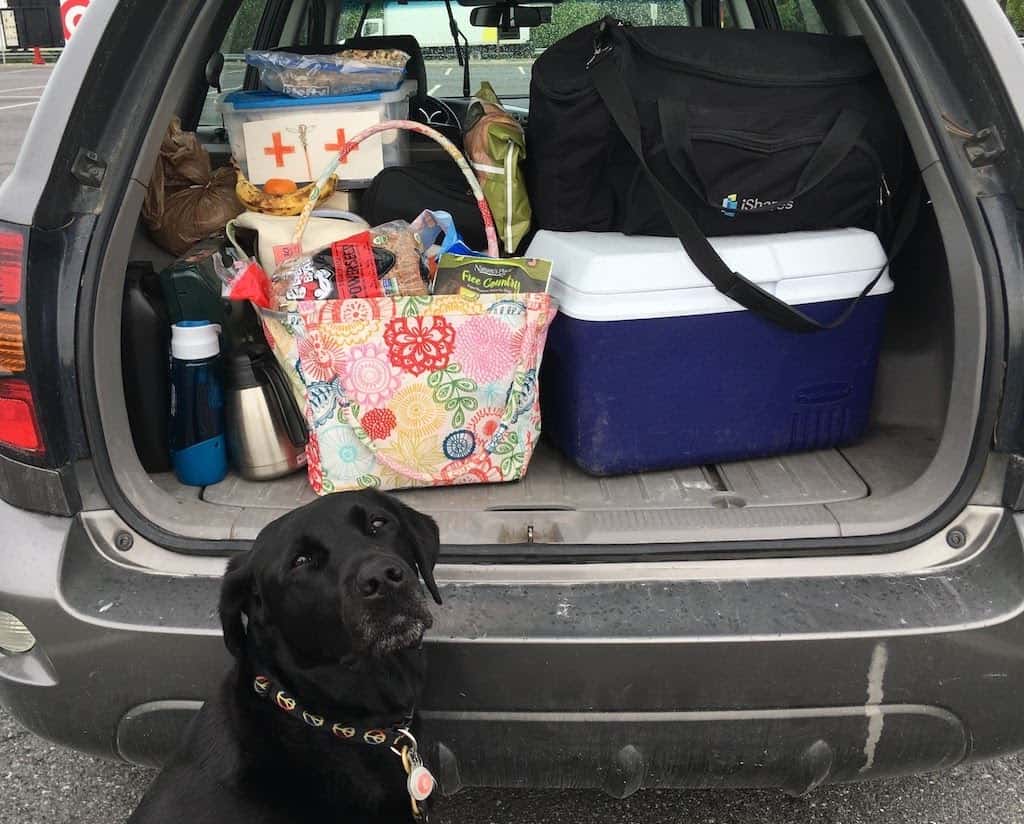
Once your plans start to take shape, you can begin collecting your road trip gear. What kind of gear, you ask?
- Basic camping supplies, if your plan is to camp along your route. Looking for cheap gear? Buy used! Check REI or Geartrade for used gear.
- Suitable clothing for all types of weather. Pack clothing that doesn’t require ironing and will do double duty: skirts and sandals you can hike in, a jacket that’s warm and waterproof, and so on. Pack light and plan to do laundry along your journey.
- A basic car repair kit. If you have basic car repair skills, bring your essential tools for emergencies. Even if car repair isn’t part of your skill set, consider bringing extra fluids and a roadside assistance card.
- Technology. Pack whatever you need to stay connected on the road, plus a way to keep it all charged. Less is more, but your definition will be different from mine.
Step 5: Hit the Road
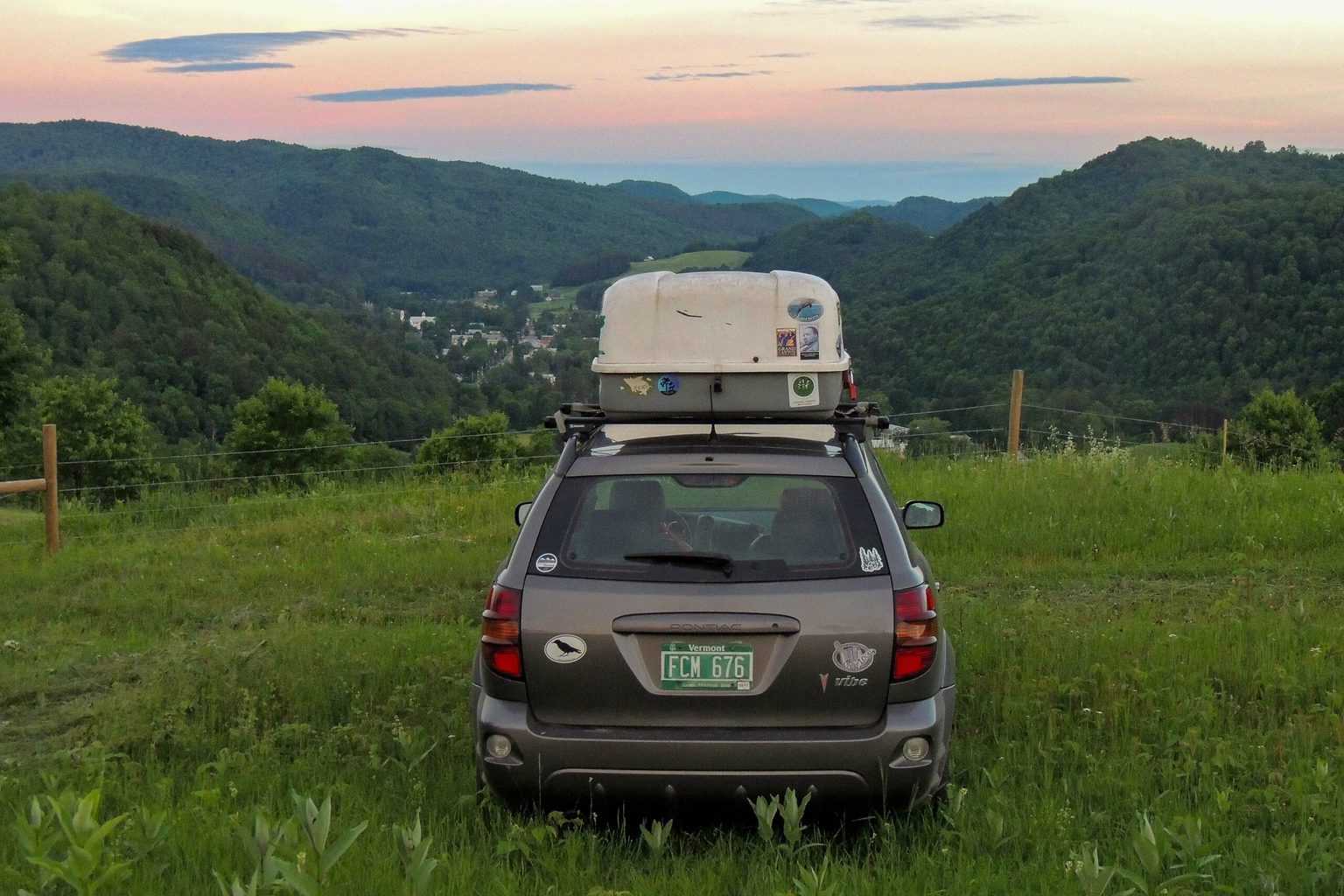
The time has come!
All your hard work has paid off, and now it’s time to hit the open road. Here are a few more tips to help you save money and enjoy every minute of your road trip.
- Download these apps. This is a list of our top 10 apps for camping and road-tripping. Some are useful for saving money while traveling. Others are just for fun!
- Cancel your subscriptions. You can watch Netflix and read the newspaper at home, but you won’t need those subscriptions on your road trip! Keep your music and audiobook subscriptions and ditch the rest!
- Traveling with a dog? Read this: Does Your Dog Deserve a Road Trip?
Cross-Country Road Trip Budget FAQ
How much does a cross-country road trip cost?
It depends on how you sleep. Using our own budgeting method for a 6,500-mile, three-week trip, we land around $2,400 if we camp the whole way, about $3,200 for a camping-and-hotel hybrid, and roughly $4,800 if we book a room every night. Gas and food stay about the same across all three. Lodging is what moves the number.
What’s the cheapest way to take a cross-country road trip?
Camping, no contest. We budget $35 a night for campsites, and in the Western US there are plenty of free dispersed sites on National Forest and BLM land. A good tent costs about the same as a night or two in a hotel, then pays for itself the rest of the trip.
How much should I budget for gas?
Take your total miles, divide by your car’s MPG, and multiply by the current price per gallon. Our small car gets 33 MPG, so a 6,500-mile trip at about $4.14 a gallon works out to roughly $815 in gas. We round up to $900 to give ourselves room to wander.
How do you save money on food on a road trip?
Pack a cooler and cook. We shop at grocery stores instead of restaurants and cook most breakfasts and dinners at camp or in an Airbnb kitchen. Figure on about 1.2 times your normal at-home grocery bill, since you’ll buy smaller quantities on the road, then add a little for the occasional ice cream cone or food truck.
Is the America the Beautiful Pass worth it?
If you’re visiting more than a couple of national parks, yes. At $80 it covers everyone in your vehicle at every National Park Service site for a full year, so it pays for itself fast.
Follow us on social media!